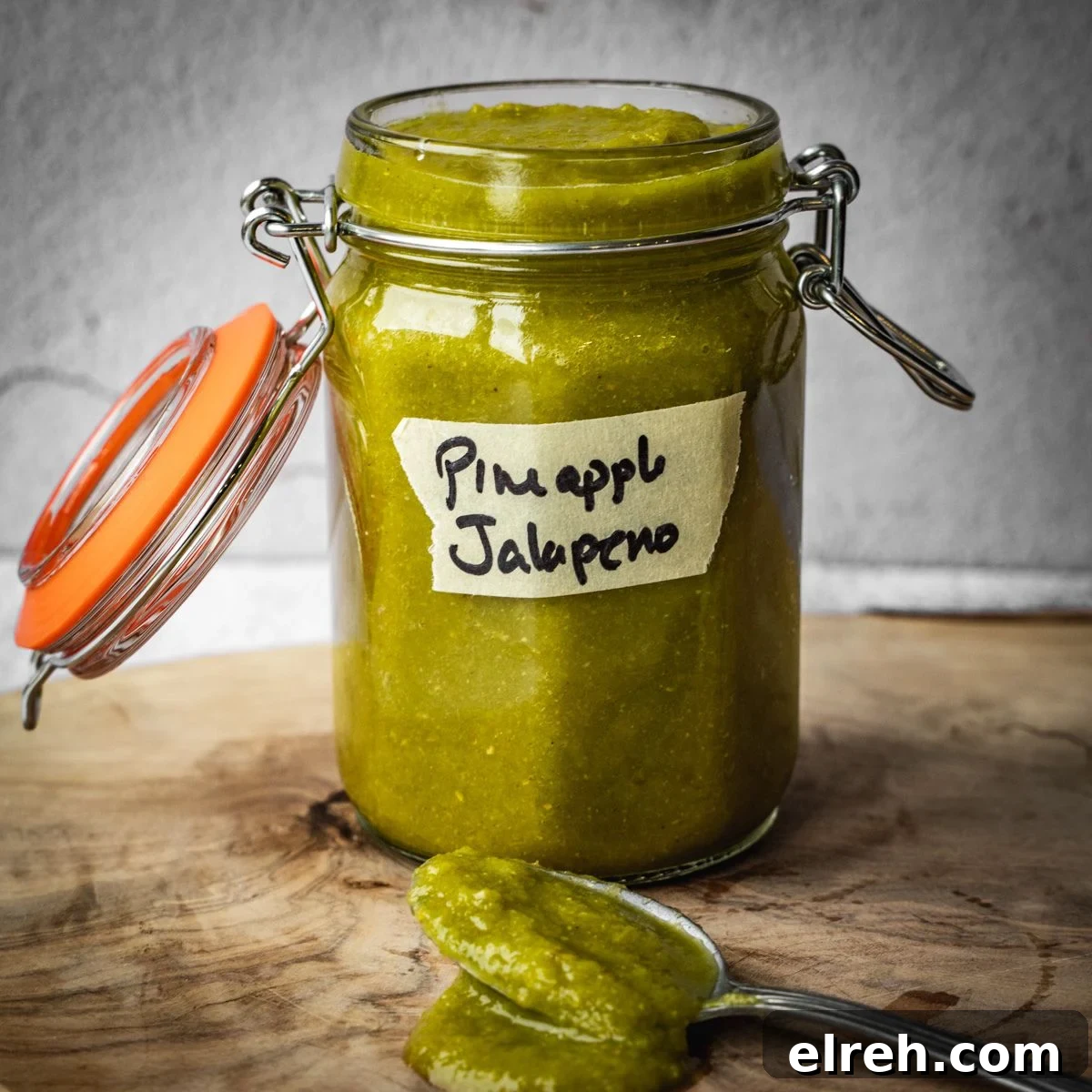
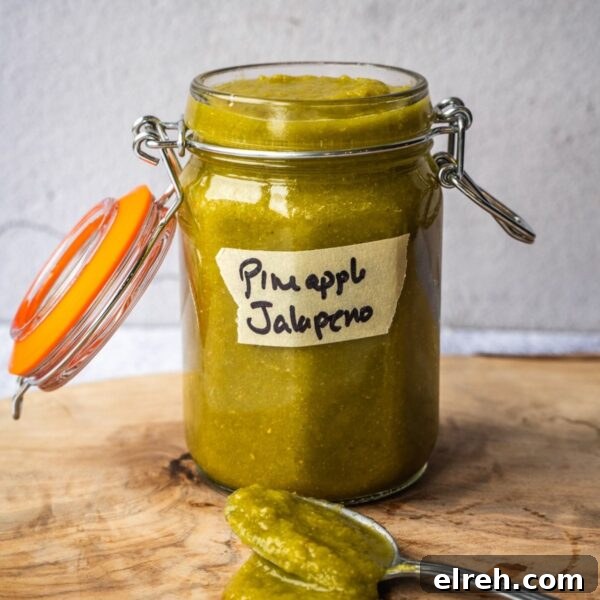
This fermented pineapple jalapeno hot sauce is a bright, flavorful twist on classic homemade hot sauce. It brings together the natural sweetness of fresh pineapple, the gentle heat of jalapeno peppers, the savory depth of onion and garlic, and the tangy complexity that comes from fermentation. The result is a sweet, spicy, and savory sauce that tastes fresh, lively, and balanced.
This recipe is simple enough for beginners and a great introduction to lacto-fermentation. Once blended, the sauce is excellent with chips, tacos, burritos, rice dishes, grilled meats, roasted vegetables, sandwiches, or any meal that needs a sweet and spicy kick.
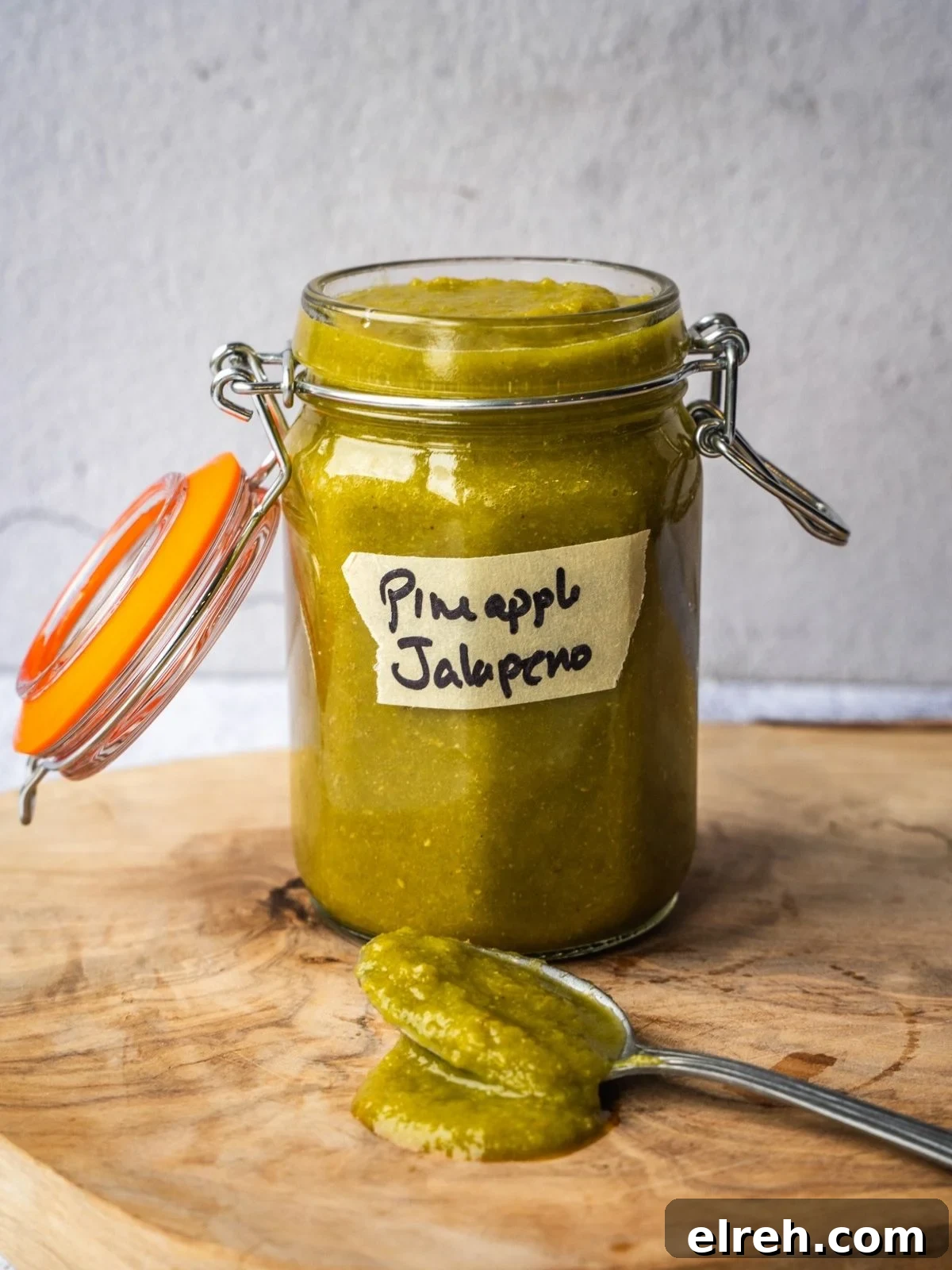
Table of Contents
- A Note on Fermented Hot Sauce
- Ingredients
- How to Make Fermented Pineapple Jalapeno Hot Sauce
- Equipment and Supplies
- Expert Tips
- Recipe FAQs
- Other Hot Sauce Recipes
- Fermented Pineapple Jalapeno Hot Sauce Recipe
A Note on Fermented Hot Sauce
Fermented hot sauce is made by submerging peppers and other ingredients in a saltwater brine for several days. During this time, natural fermentation develops a tangy flavor and softens the sharpness of the raw ingredients. In this recipe, jalapenos, pineapple, onion, and garlic ferment together before being blended into a smooth sauce.
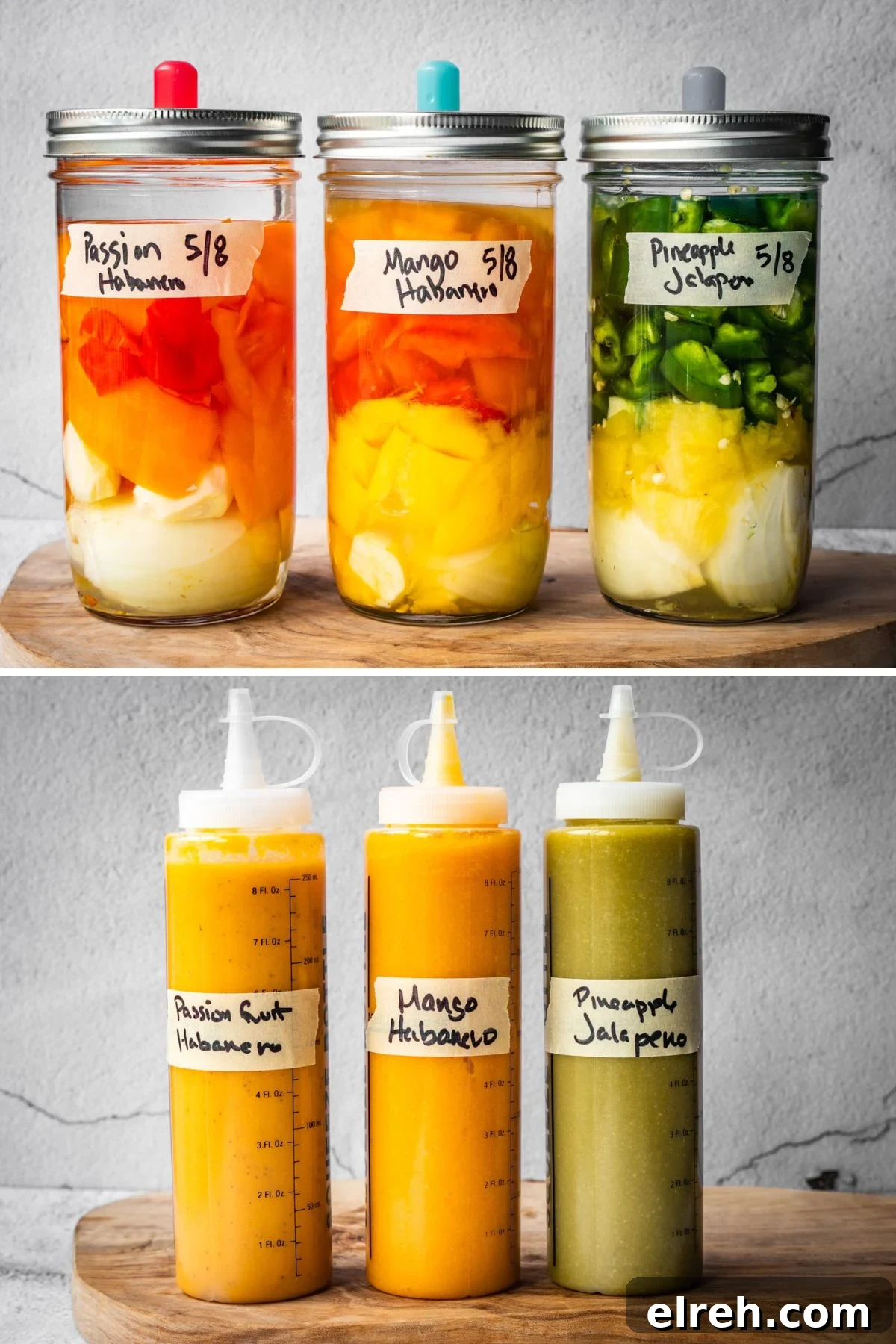
The fermentation step is what gives this pineapple jalapeno hot sauce its depth. Instead of tasting only sweet and spicy, the finished sauce has a rounded, slightly tangy character that works especially well with grilled food, Mexican-inspired dishes, rice bowls, and snacks.
The process is straightforward: make a brine, pack the jar, ferment the ingredients, strain, blend, season, and bottle. A fermentation lid and weight are helpful, but you can still make the recipe with a standard mason jar lid if you burp the jar daily to release built-up gas.
Ingredients
This pineapple jalapeno hot sauce uses easy-to-find ingredients. For the best fermentation and flavor, choose fresh produce whenever possible. Organic produce is a good option for fermentation because it is less likely to have residues that could interfere with the process.
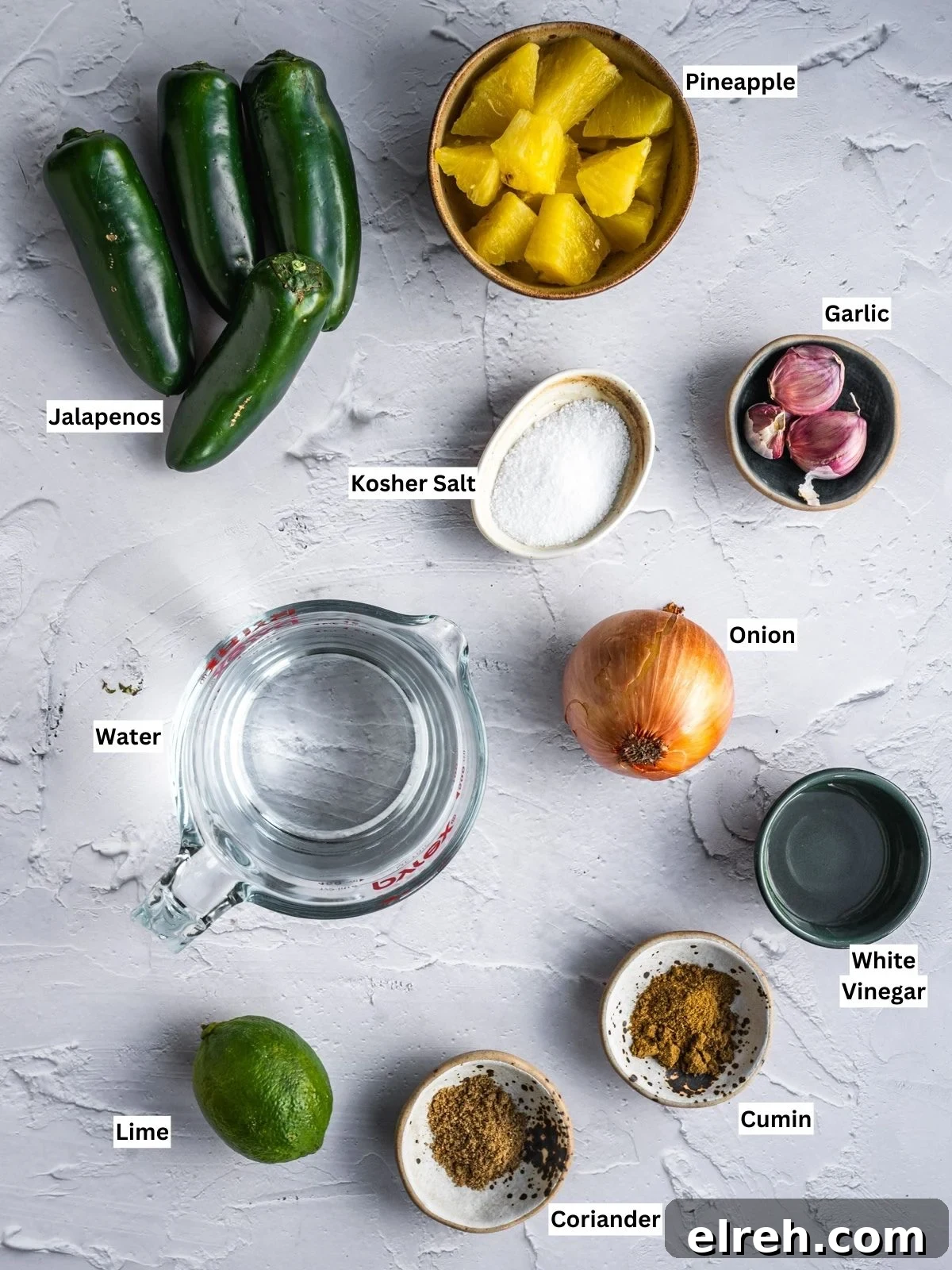
- Fruit: Fresh, sweet pineapple is essential for the best flavor and texture. Canned pineapple is not recommended for this recipe.
- Peppers: Fresh jalapenos provide a moderate heat level and a clean green pepper flavor. Serrano peppers can also be used if you want a sharper, hotter sauce.
- Aromatics: Garlic and white onion add savory depth and help balance the sweetness of the pineapple.
- Brine: Unchlorinated water and salt create the environment needed for fermentation. Bottled, spring, or filtered water is ideal.
- Seasonings: Ground cumin and ground coriander add warmth and complexity. You can adjust them to taste or leave them out for a simpler sauce.
- Acid: Lime juice and vinegar are added after fermentation to brighten the sauce and help preserve its fresh flavor and color.
See the recipe card below for exact ingredient quantities.
How to Make Fermented Pineapple Jalapeno Hot Sauce
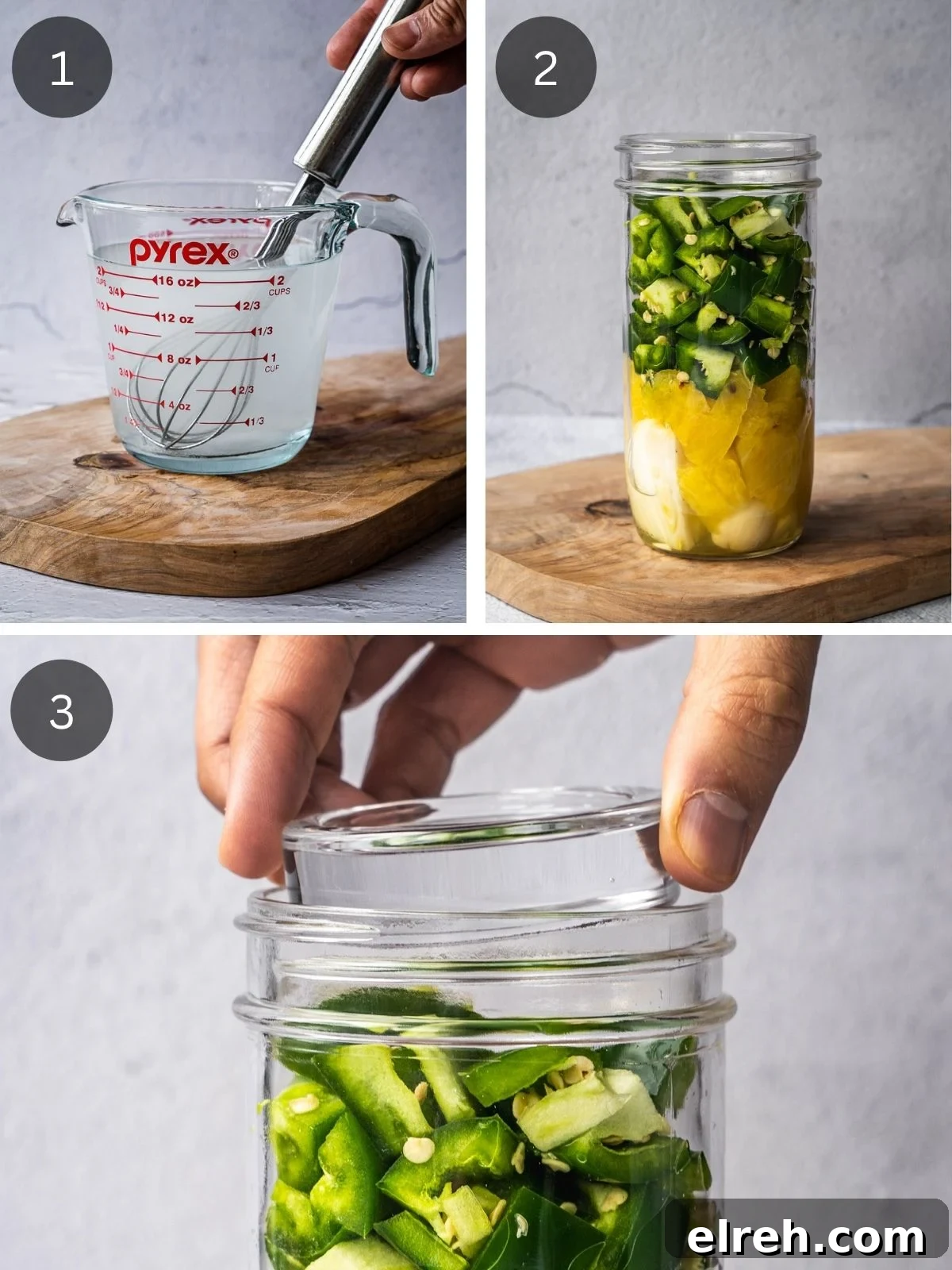
1. Make the brine. In a measuring cup, combine the water with kosher salt, sea salt, or pickling salt. Whisk until the salt is fully dissolved (Image 1).
2. Pack the jar. Place the garlic and white onion in the bottom of a clean mason jar. Add the fresh pineapple and jalapeno peppers, pressing down gently but firmly as you fill the jar (Image 2).
3. Weigh down the ingredients. Add a fermentation weight if you have one. This helps keep the pineapple and peppers submerged under the brine (Image 3).
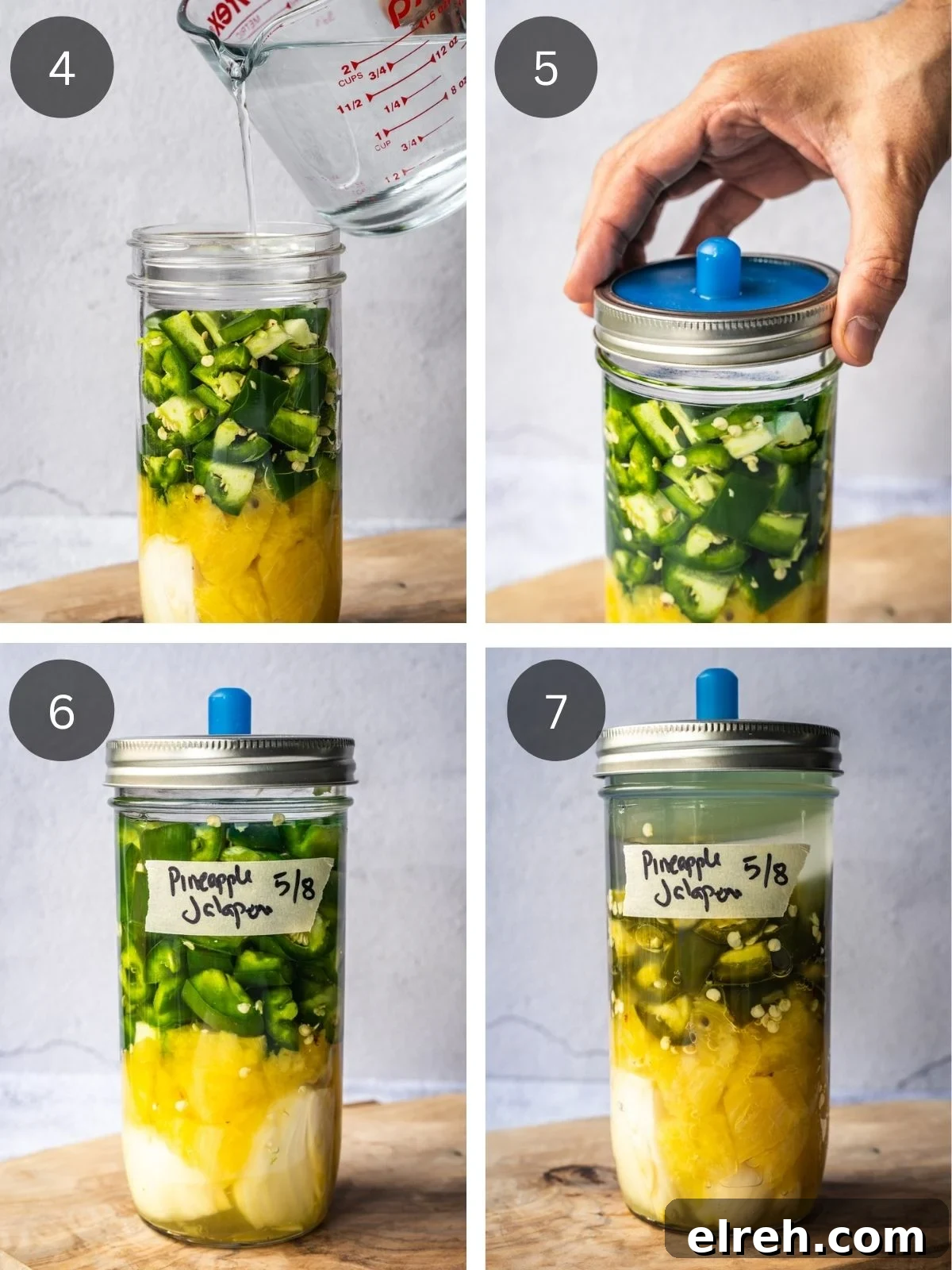
4. Add the brine. Pour the salt brine into the jar until the ingredients are covered. Tap the jar lightly to release trapped air bubbles. Discard any leftover brine (Image 4).
5. Ferment. Add a fermentation lid or airlock. Let the jar ferment at room temperature, away from direct sunlight, for 3–5 days (Images 5 and 6). The longer it ferments, the tangier the sauce becomes. Cloudy brine is normal during fermentation (Image 7).
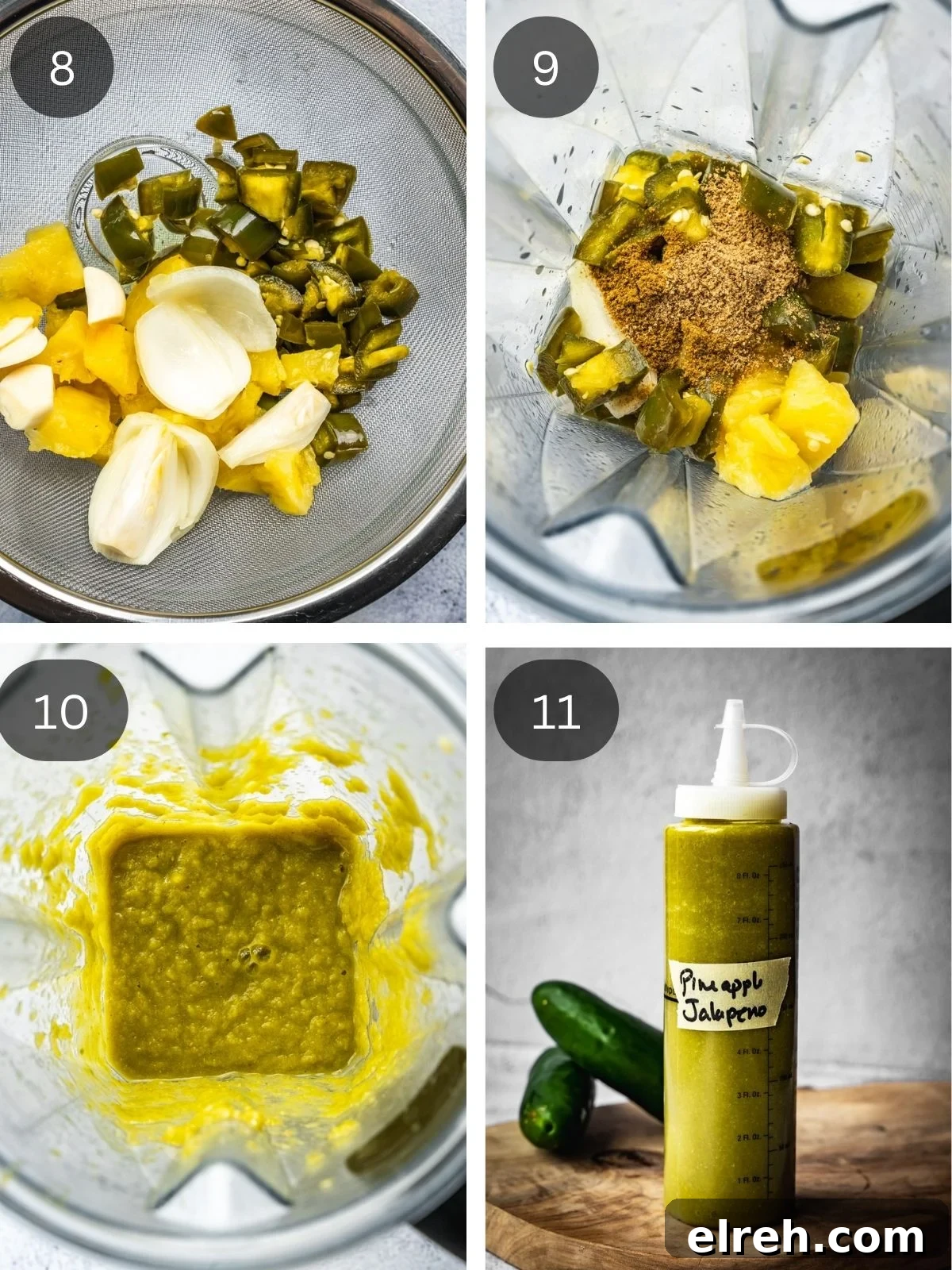
6. Strain. Strain the fermented ingredients, but reserve the brine in case you need it to thin the sauce (Image 8).
7. Blend. Transfer the jalapenos, pineapple, onion, and garlic to a blender. Add the lime juice, vinegar, cumin, and coriander. Blend until smooth, or stop earlier if you prefer a more textured sauce. Add a small splash of reserved brine if the sauce is too thick (Images 9 and 10).
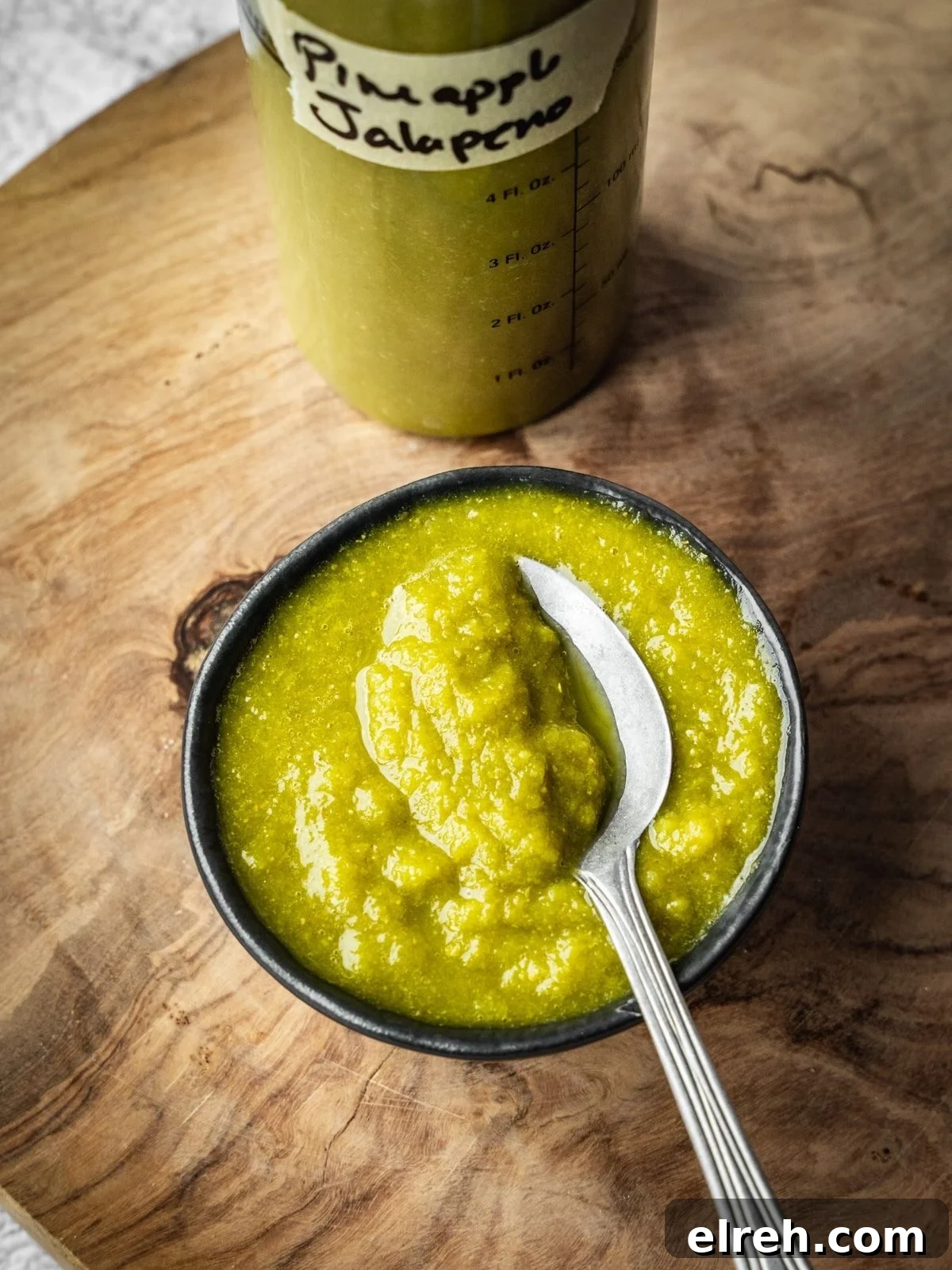
8. Bottle. Pour the finished sauce into a squeeze bottle or clean glass jar. Refrigerate and use within 2–3 weeks (Image 11).
Equipment and Supplies
A fermentation lid, also called an airlock, is not absolutely required, but it is highly recommended. It allows gases to escape while limiting oxygen exposure. This makes the fermentation process easier and more reliable.
If you do not have a fermentation lid, use a standard mason jar lid and carefully loosen it once or twice a day to release pressure. Tighten it again after burping the jar. This method works, but it is less ideal because it may allow oxygen back into the jar.
Glass fermentation weights are also useful. They help keep the pineapple, peppers, onion, and garlic below the brine, which is important for a safe and even ferment.
Expert Tips
- Wear gloves. Jalapenos can irritate your skin and eyes. Use latex or nitrile gloves when cutting and handling hot peppers.
- Use glass for fermentation. Glass mason jars are ideal. Avoid plastic or metal containers, as they may react with acidic ingredients.
- Keep everything clean. Wash jars, lids, weights, and utensils thoroughly before use. For extra care, wash them in hot soapy water and boil them for 5 minutes.
- Keep ingredients submerged. Peppers and pineapple should stay under the brine during fermentation. A glass weight makes this easier.
- Expect separation. Homemade hot sauce may separate in the refrigerator. Shake the bottle before using to bring the sauce back together.
- Watch the ferment. Cloudy brine is common and usually normal. If the ferment smells unpleasant, looks moldy, or seems unsafe, discard it. When in doubt, throw it out.
- Refrigerate after blending. Once the sauce is finished, do not leave it at room temperature. Store it in the refrigerator and use it within 2–3 weeks.
Recipe FAQs
Yes, but the flavor will be different. To make a quick version, blend the pineapple, jalapenos, onion, garlic, cumin, coriander, vinegar, and lime juice. Season with salt to taste and add water if needed to adjust the consistency.
During fermentation, keep the jar at room temperature and away from direct sunlight. After the sauce is blended, store it in the refrigerator.
Because this recipe contains fresh fruit, it is best used within 2–3 weeks.
Freezing is not recommended because it can change the flavor and texture. If you make a large batch, you can freeze it in small containers and use it within 6 months.
Other Hot Sauce Recipes
Preservation
Chipotle Hot Sauce Recipe
Preservation
Homemade Fermented Hot Sauce
Fermentation
Sambal Oelek
Preservation
Shatta Chile Paste
Fermented Pineapple Jalapeno Hot Sauce
Equipment
-
¾ quart mason jar, about 24 fl oz
-
Fermentation weight, optional but recommended
-
Fermentation lid or airlock, optional but recommended
-
Blender
-
Squeeze bottle or clean glass jar for storage
Ingredients
Brine
- 2 cups unchlorinated water – bottled, spring, or filtered water is fine
- 1 tbsp kosher salt, sea salt, or pickling salt – about 17 grams
Fermentation Ingredients
- 2–3 garlic cloves
- ½ white onion
- 1 cup fresh pineapple – chopped into chunks
- 4–5 fresh jalapeno peppers – chopped into chunks
Seasoning After Fermentation
- 2 tbsp white vinegar
- 1 tbsp lime juice
- ½ tsp ground cumin
- ½ tsp ground coriander
Instructions
-
Make the brine. Combine the water and salt in a measuring cup. Whisk until the salt has completely dissolved.
-
Pack the jar. Add the garlic and white onion to the bottom of a clean mason jar. Pack in the pineapple and jalapeno peppers, pressing gently as you fill the jar.
-
Weigh down. Add a fermentation weight if using one. This keeps the ingredients submerged under the brine.
-
Add the brine. Pour the brine over the ingredients until covered. Tap the jar to release air bubbles. Discard any extra brine.
-
Ferment. Add a fermentation lid and ferment at room temperature, away from direct sunlight, for 3–5 days. The longer it ferments, the tangier the sauce will taste.
-
Strain. Strain the fermented ingredients and reserve the brine.
-
Blend. Add the fermented pineapple, jalapenos, onion, and garlic to a blender. Add the vinegar, lime juice, cumin, and coriander. Blend until smooth, adding a splash of reserved brine if needed.
-
Bottle and store. Transfer the hot sauce to a clean squeeze bottle or glass jar. Refrigerate and use within 2–3 weeks.
Notes
- No fermentation lid? Use a regular mason jar lid and burp the jar daily to release built-up gas.
- Adjust the heat: Use fewer jalapenos for a milder sauce or serrano peppers for more heat.
- Adjust the texture: Blend until completely smooth or leave a little texture if you prefer a rustic hot sauce.
- Storage: Keep the finished sauce refrigerated and use it within 2–3 weeks.
Nutrition
Carbohydrates: 2g,
Sodium: 350mg,
Sugar: 1g
Nutrition information is automatically calculated and should be used as an approximation.
 Like this recipe? Rate and comment below.