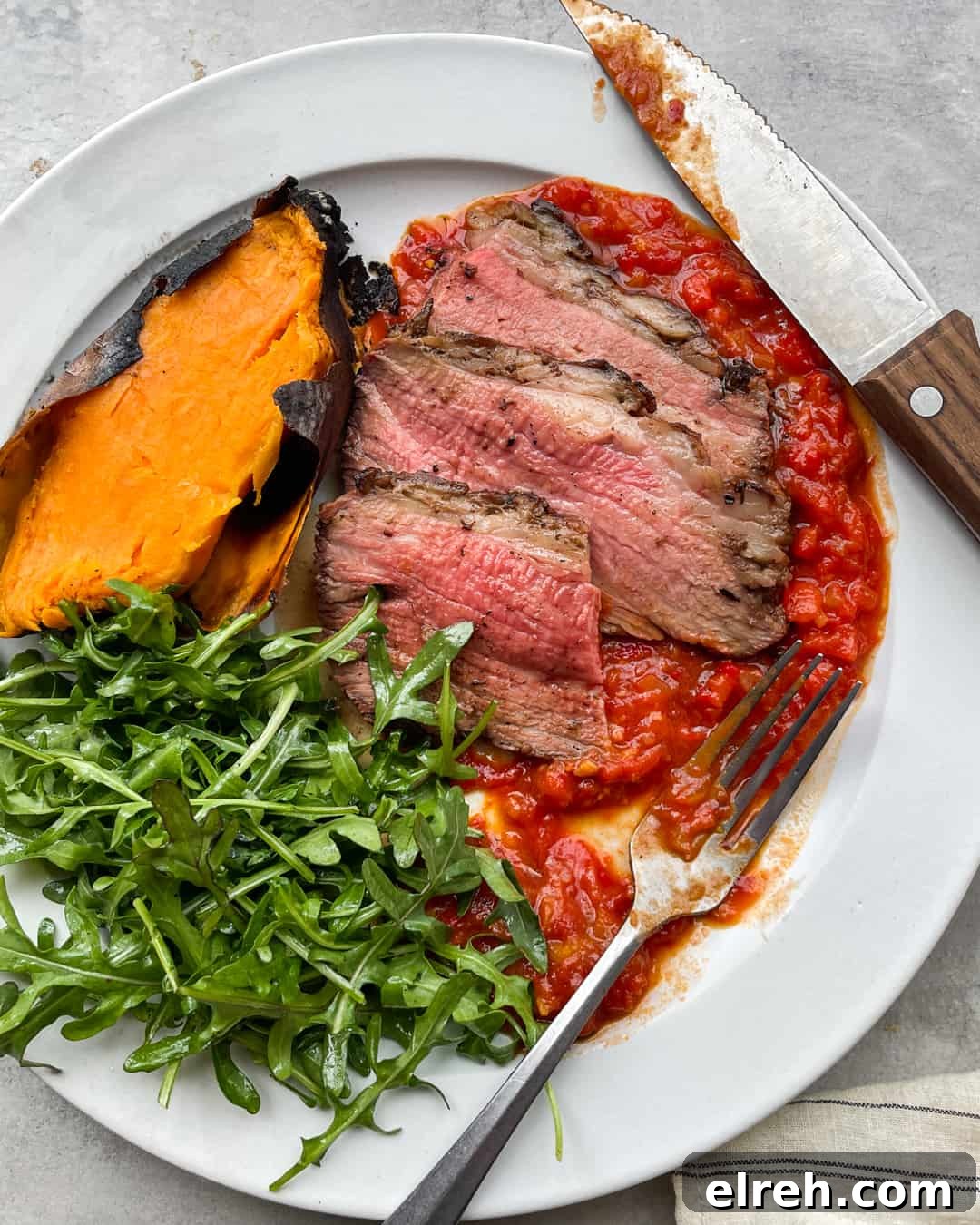
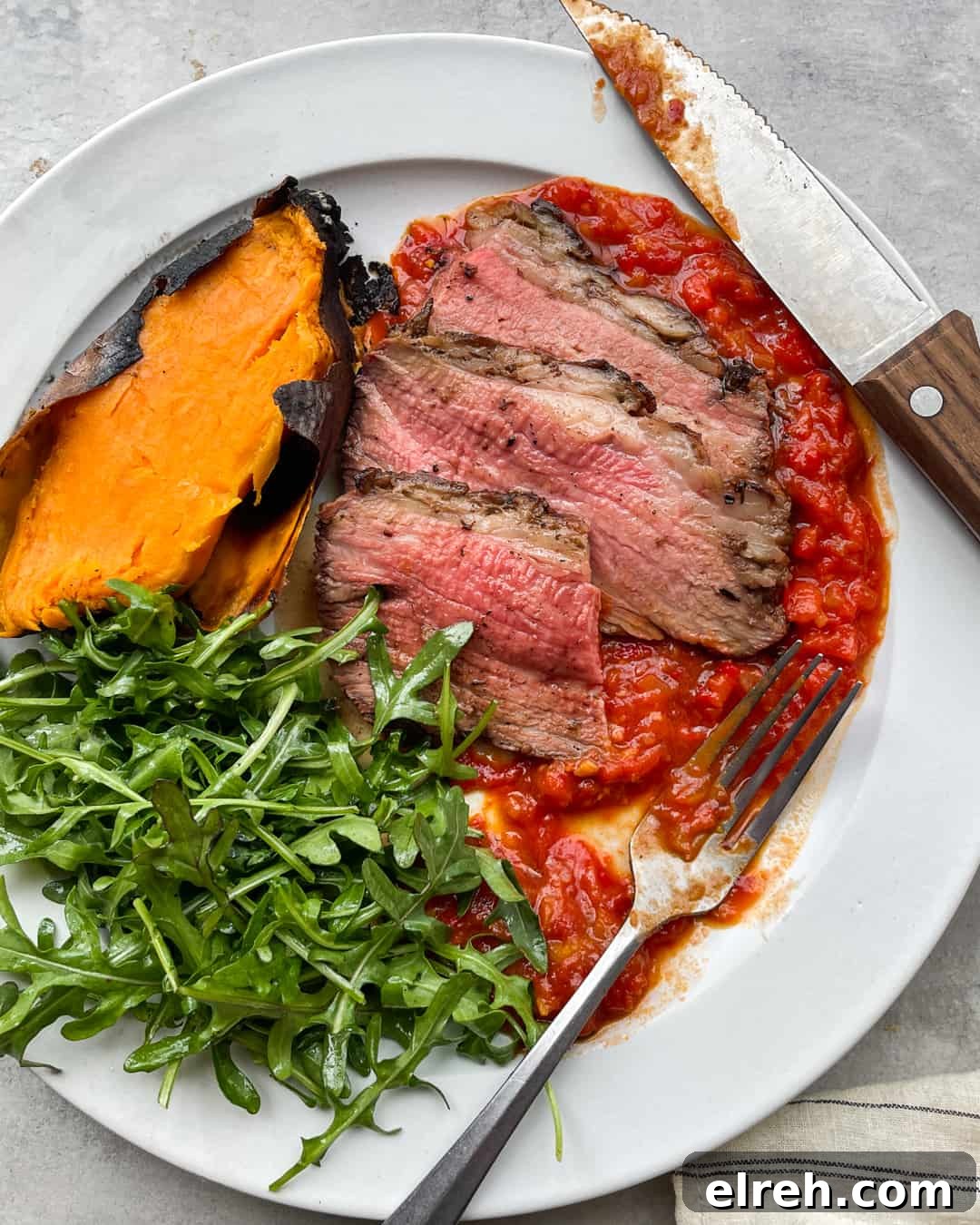
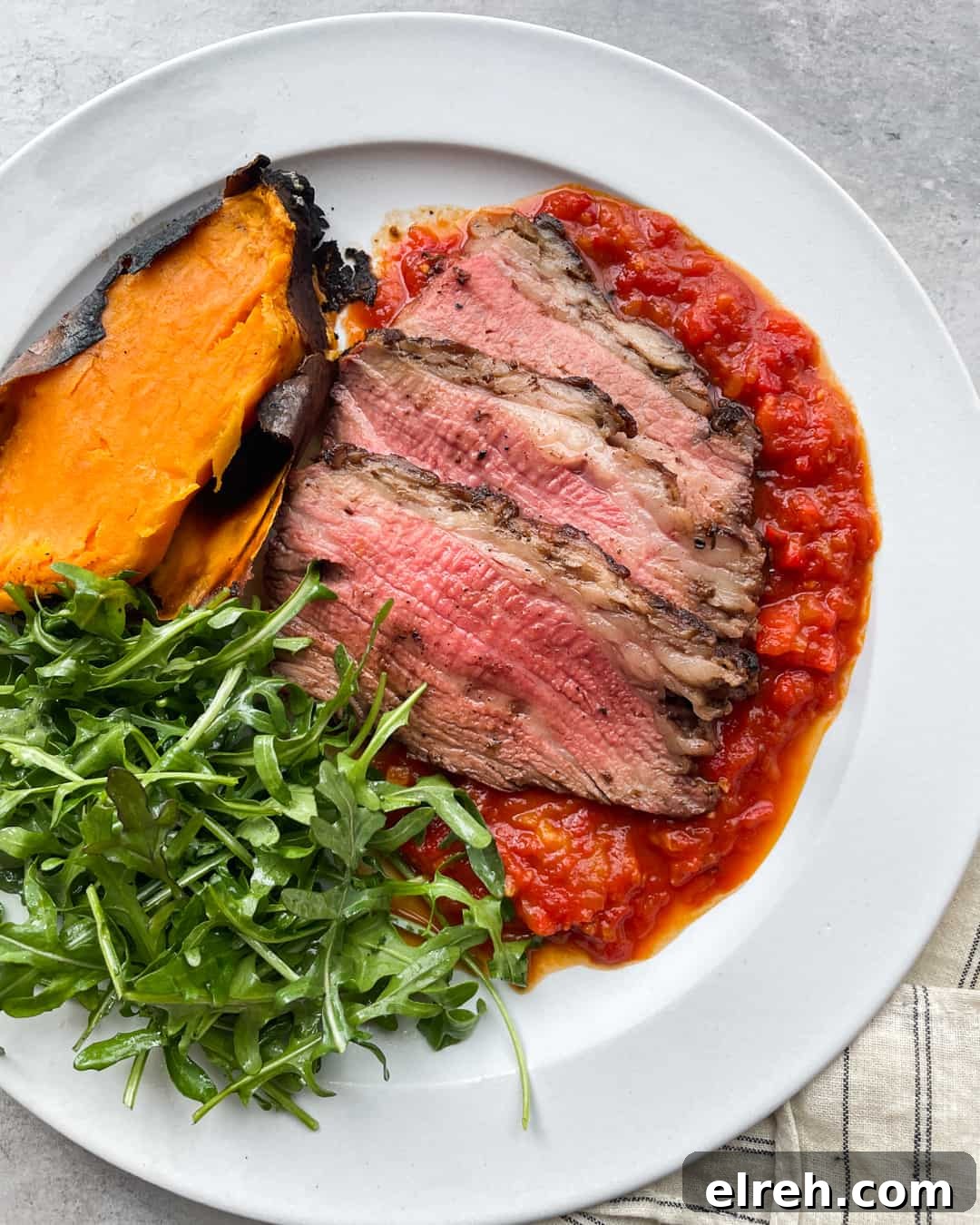
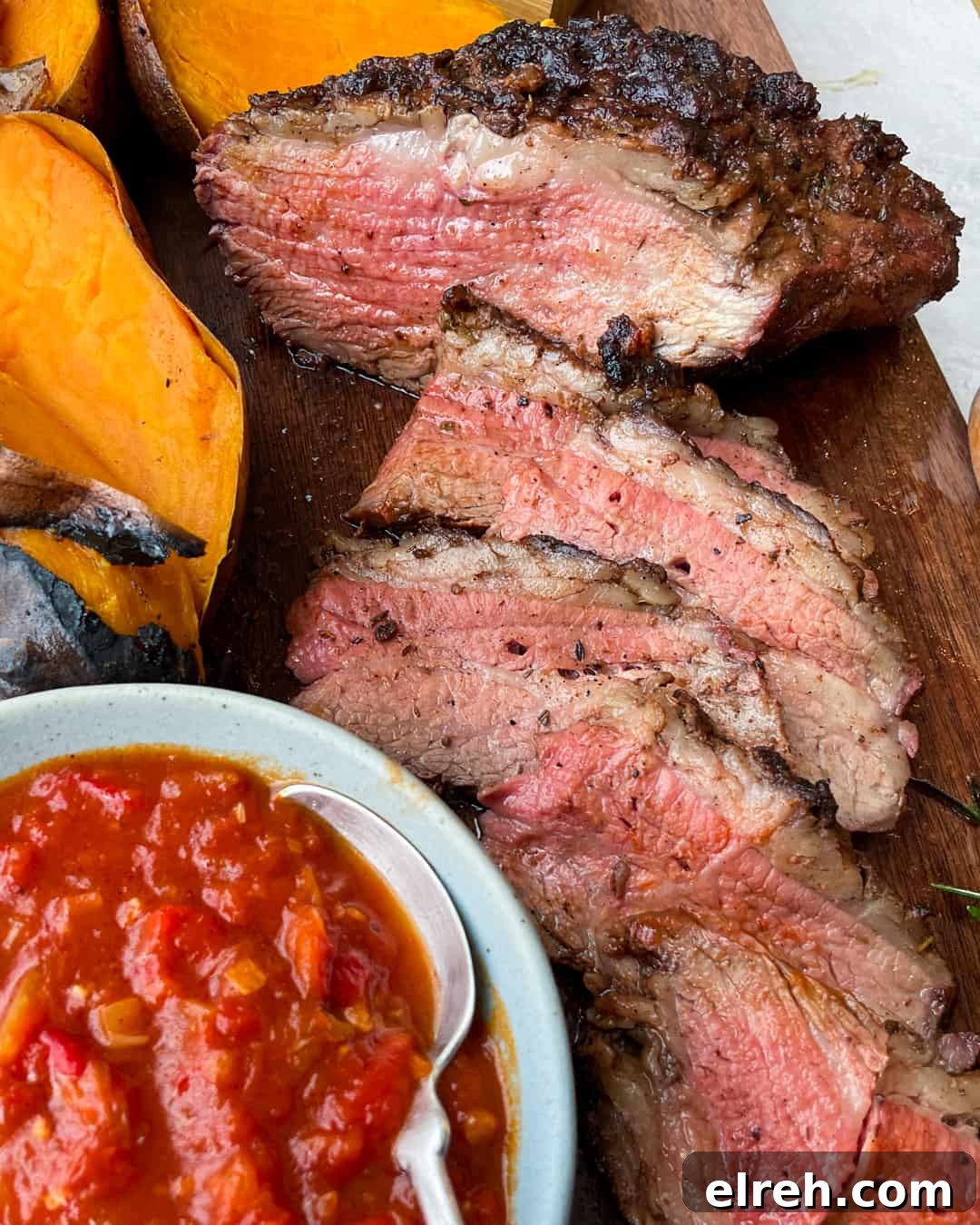
This Grilled Tri-Tip with Salsa Rossa Piccante delivers a deeply charred crust, a juicy pink center, and a bright, slightly spicy tomato sauce. The roast is marinated in herbs and spices, grilled whole in the Santa Maria style, then basted with a garlicky oil-and-vinegar mixture. Serve with the spicy salsa rossa, roasted sweet potatoes and a peppery arugula salad for a complete, balanced meal.
What You Need for Grilled Tri-Tip
- Tri-Tip Roast: Use a whole tri-tip roast (also called bottom sirloin or Santa Maria roast), typically 2.5–3 pounds for 4–6 servings. If you can’t find tri-tip, a whole picanha (top sirloin rump) or another sirloin roast can work as a substitute.
- Fresh Herbs: Fresh rosemary and thyme, plus a touch of dried oregano, give the roast its aromatic backbone. If you only have dried herbs, reduce the amount to about half to avoid overpowering the meat.
- Spices: Garlic powder, smoked paprika and a pinch of cayenne provide smoky, savory depth and a touch of heat.
- Oil and Vinegar Baste: A simple basting sauce of extra-virgin olive oil, red wine vinegar and fresh garlic adds gloss and flavor while grilling.
- Shallot and Garlic: Sautéed shallot and garlic form the flavor base of the salsa rossa. A small onion can be used in place of shallot if needed.
- Fresh Red Chile: Choose the chile that matches your heat preference — red finger chiles or Anaheim for mild heat, or a spicier red chile for more kick. Adjust seeds to control intensity.
- Canned Whole Tomatoes: Canned whole Italian tomatoes (San Marzano if available) cook down to a balanced texture and flavor. If fresh tomatoes are used, grilling them first adds smoky complexity.
- Roasted Red Peppers: Jarred roasted peppers are convenient, but blistered, fire-roasted peppers deliver a deeper, wood-fired flavor if you can roast them yourself.
- Cinnamon Stick: A small cinnamon stick tossed into the sauce brightens it with warm, aromatic notes; omit if you dislike cinnamon in savory dishes.
What is Tri-Tip?
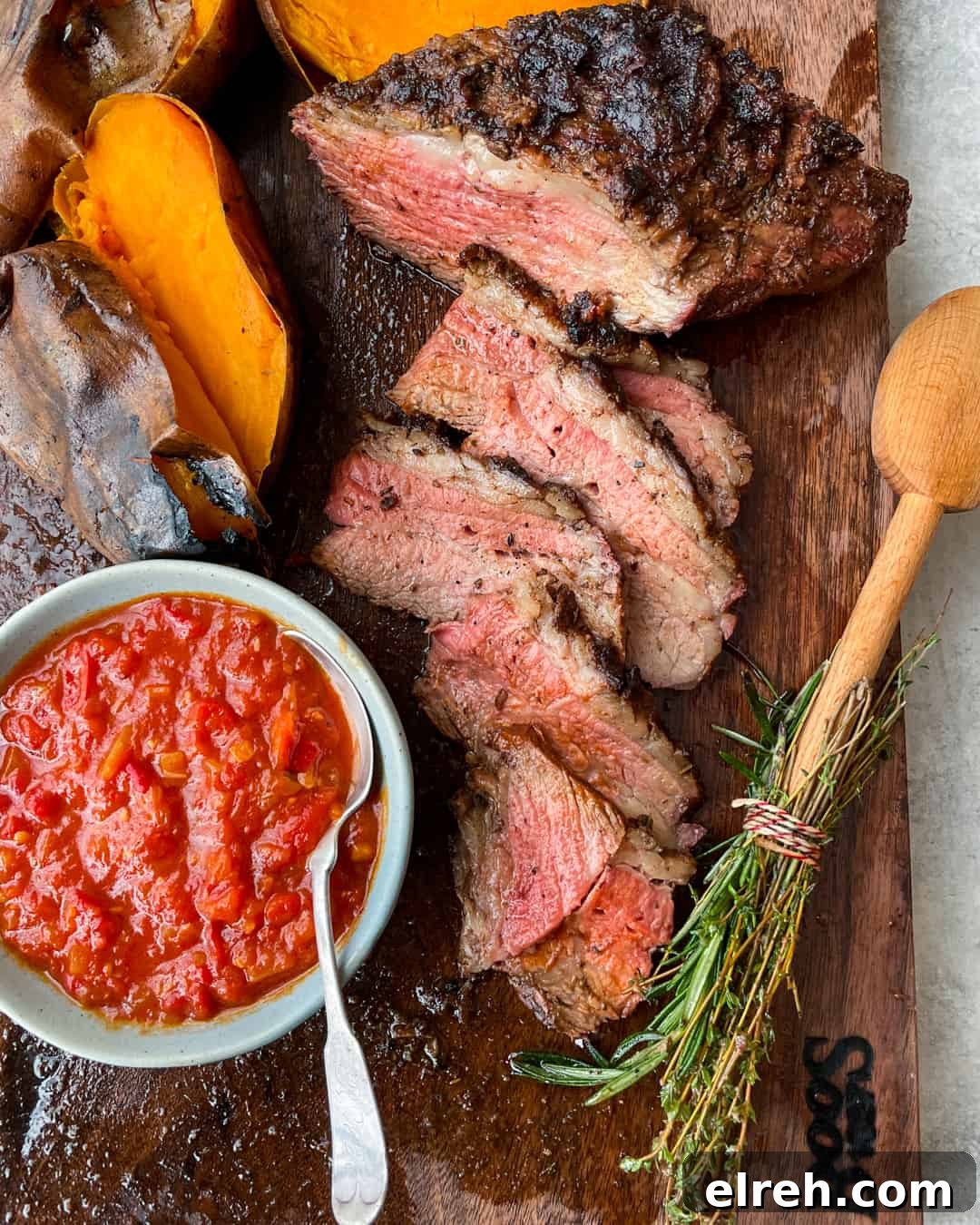
Tri-tip is a triangular cut from the bottom sirloin. It has a pleasing amount of intramuscular fat that keeps the meat juicy while still remaining relatively lean compared with ribeye or tenderloin. That balance of flavor, tenderness and affordability makes tri-tip an attractive option for weeknight dinners and casual gatherings.
The cut is especially popular on the U.S. West Coast, where Santa Maria–style grilling is a regional tradition. Availability varies by location, so you may need to ask your butcher to special-order it if it’s not stocked regularly.
Make Some Salsa Rossa Piccante
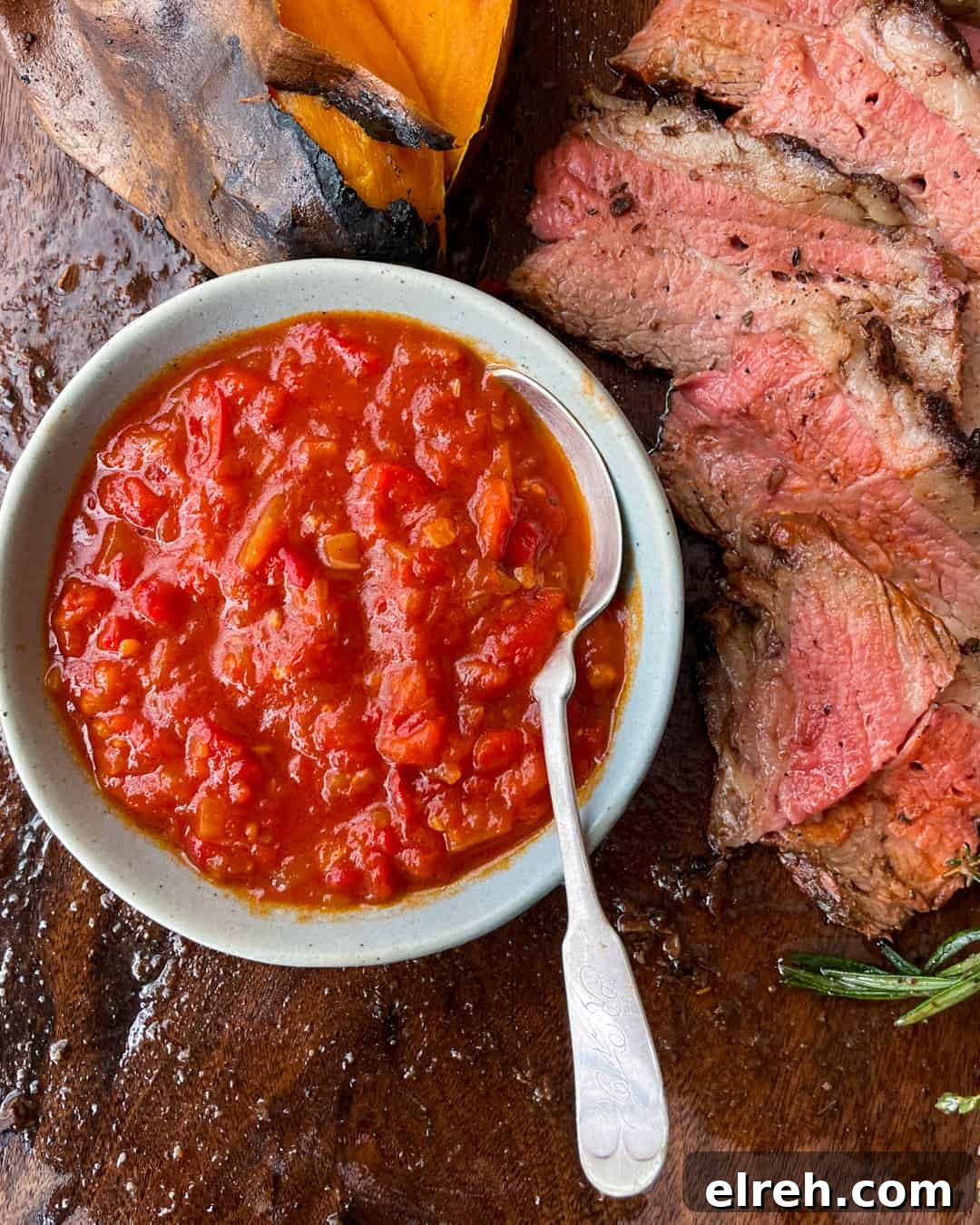
Salsa rossa — literally “red sauce” — is a versatile, rustic tomato sauce perfect for grilled meats. This version leans toward Italian flavors: sautéed shallot, garlic and fresh chile in olive oil with a cinnamon stick, followed by canned tomatoes and roasted red peppers. A splash of red wine vinegar brightens the sauce. It pairs beautifully with grilled tri-tip and can be made ahead and refrigerated for up to five days.
Best Ways to Cook Tri-Tip?
Tri-tip is adaptable: you can pan-sear and baste it with butter, grill it whole over high heat, slow-roast it in the oven, or smoke it for barbecue. Marinating the roast and finishing over indirect heat yields a good balance of char and tender interior. Because of its marbling, tri-tip is forgiving and stays juicy when cooked to medium-rare or medium.
Grilling whole in the Santa Maria style — searing on high direct heat and finishing over indirect heat — is a classic and reliable method for this cut.
What is Two-Zone Grilling?
Two-zone grilling sets up one area of the grill for high direct heat and another for lower indirect heat. This lets you sear quickly over direct heat, then move food to indirect heat to finish cooking gently without burning. On pellet grills or Traeger units, you can replicate this by using the lower grate for searing and the upper rack to finish the roast more slowly. Two-zone grilling gives you precise control and consistent results for larger roasts like tri-tip.
Grilled Tri-Tip with Salsa Rossa Piccante
This recipe yields about 4 servings.
- Prep time: 20 minutes
- Cook time: 40 minutes
- Marinating time: 1 hour (up to 4 hours)
- Total time: ~2 hours (including resting and passive time)
Ingredients
For the Salsa Rossa Piccante
- 3 red bell peppers (or jarred roasted red peppers)
- 2 tablespoons extra-virgin olive oil
- 2 medium shallots, thinly sliced
- 2 cloves garlic, finely chopped
- 1 red finger chile, thinly sliced (adjust to taste)
- 1 small cinnamon stick (optional)
- ¼ teaspoon kosher salt, plus more to taste
- 1 can whole peeled tomatoes (San Marzano recommended)
- 2 tablespoons red wine vinegar
- ¼ teaspoon freshly cracked black pepper, plus more to taste
For the Basting Sauce
- 2 tablespoons red wine vinegar
- 2 tablespoons extra-virgin olive oil
- 2 cloves garlic, finely grated
- 2 sprigs fresh rosemary
- 5 sprigs fresh thyme
For the Grilled Tri-Tip
- 3 tablespoons avocado oil (or neutral oil)
- 3 tablespoons red wine vinegar
- 2 sprigs fresh rosemary, leaves finely chopped
- 5 sprigs fresh thyme, leaves finely chopped
- 2 teaspoons kosher salt
- 1 teaspoon garlic powder
- 1 teaspoon dried oregano
- 1 teaspoon smoked paprika
- ½ teaspoon cayenne pepper (adjust to heat preference)
- ½ teaspoon freshly cracked black pepper
- 2.5–3 pound whole tri-tip roast, fat cap on
Instructions
For the Salsa Rossa Piccante
- Preheat your grill to high (around 500°F). Place the red peppers directly on the grate and roast, turning occasionally, until the skins are blackened and blistered, about 20 minutes total. Transfer to a bowl, cover and let cool.
- Peel the skins, remove stems and seeds, then roughly chop the pepper flesh and set aside.
- Heat the olive oil in a saucepan over medium heat. Add the shallot, garlic, sliced chile and the cinnamon stick. Season with salt and cook, stirring, until the shallots are translucent, about 4 minutes.
- Add the canned tomatoes and break them up with a wooden spoon. Stir in the roasted peppers and red wine vinegar. Simmer, stirring occasionally, until the sauce thickens slightly, about 10 minutes. Adjust salt, pepper and vinegar to taste. Keep warm or refrigerate—sauce can be made up to 5 days ahead.
For the Basting Sauce
- Whisk together the red wine vinegar, olive oil and grated garlic in a small bowl. Cover and set aside.
- To make a simple basting brush, tie the rosemary and thyme sprigs together with kitchen twine and secure them to the handle of a wooden spoon.
For the Grilled Tri-Tip
- In a large bowl, mix the avocado oil, red wine vinegar, chopped rosemary and thyme, kosher salt, garlic powder, oregano, smoked paprika, cayenne and black pepper. Score the fat cap of the tri-tip in a crosshatch pattern and massage the roast with the marinade. Cover and refrigerate for 1–4 hours.
- About 30 minutes before cooking, remove the roast from the refrigerator to come to room temperature. Preheat the grill to 500°F.
- Place the tri-tip fat side up on the hottest part of the grill (direct heat) and sear for about 10 minutes with the grill closed, until well charred but not burned. Flip, baste and sear the other side for another 10 minutes.
- Move the tri-tip to the cooler zone (indirect heat), fat side up. Baste again and continue cooking with the grill closed until the thickest part reaches 135°F for medium-rare or 145°F for medium — about 12–18 more minutes depending on roast size and grill temperature.
- Transfer the roast to a cutting board and rest for 10 minutes. Slice thinly against the grain and serve with the Salsa Rossa Piccante and sides such as roasted sweet potatoes and arugula salad.
Tried this recipe? Leave a comment below!