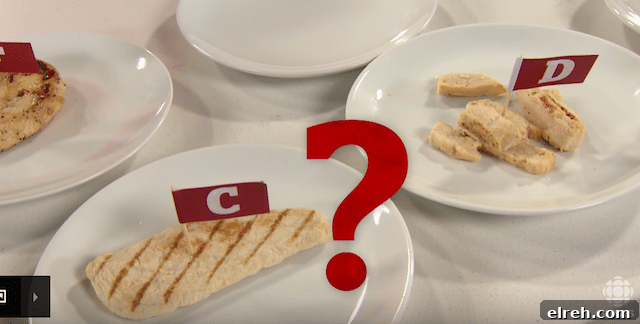
Many people choose grilled chicken sandwiches at fast food restaurants believing they are making a healthier choice. As a dietitian, I’m concerned that diners don’t always understand the risks of eating too much fast food grilled chicken breast. Is fast food grilled chicken truly healthy? What is actually in it, and how do those ingredients affect its nutritional value?
CBC Marketplace investigated seemingly healthy grilled chicken breast sold by popular fast food chains. They sent samples to independent labs for DNA and nutritional analysis, and also obtained ingredient lists and nutrition information from the companies. Journalists spoke with a food scientist to explain why certain additives are used in the production of fast food chicken breasts.
The investigation highlights important questions about how these products are made and what the nutrition lab results mean for our health.
Is Fast Food Grilled Chicken Healthy?
I participated as the nutrition expert early in the CBC Marketplace investigation to identify concerns, interpret the lab results, and advise on what to ask the food scientist. I knew some frozen chicken products contain questionable ingredients, but I wanted to see which chains used the least processed, healthiest chicken.
I also did a live interview on CBC News Network to discuss the Marketplace investigation and the nutrition findings.
Rubber Chicken, Anyone?
Are you surprised to learn many fast food restaurants don’t use a single whole chicken breast on sandwiches or salads? The rubbery texture of some “100% white meat chicken” indicates these pieces are not like home-cooked chicken. Fast food and other food-service chicken often have ingredients added to improve tenderness and retain moisture during cooking, freezing, transport and reheating. Those additives change the texture—and the nutritional profile.
Fast Food Companies are Misleading You with “Healthy” and “Natural” 100% Chicken Breast
Companies may label a product “100% chicken breast” even when the finished piece contains non-chicken ingredients. According to Canadian regulations, a product can be called chicken if a relatively small percentage of its protein comes from chicken—an allowance that many consumers would find unacceptable. Marketing terms like “natural” and “fresh,” paired with healthy imagery, create a health halo that can mislead customers into thinking they are making a genuinely healthier choice.
Fast food grilled chicken breast is NOT the same as your home-cooked chicken.
The “Big 3” Sketchy Ingredients in Fast Food Chicken
Several additives commonly found in fast food grilled chicken are worth watching. I identified three main categories—what I call “The Big 3”—that have the largest impact on health and nutrition: 1) Sodium; 2) Phosphate additives; 3) Sugars and starches.
1. Sodium
Too much sodium increases the risk of high blood pressure and can stress the kidneys. While fast food is already known for high salt levels, the grilled chicken options are often far saltier than expected.
- Compared to the same serving size of home-cooked chicken breast, the tested fast food samples had seven to ten times more sodium.
- Some grilled chicken sandwiches contained as much or more sodium than a cheeseburger with fries—around 1,000 mg of sodium, roughly two-thirds of the recommended daily limit for many adults.
2. Phosphate Additives
Phosphate additives help proteins bind water, making chicken appear juicier and plumper after processing and reheating. Unfortunately, there are growing health concerns about these additives.
Phosphate additives may pose cardiovascular risks similar to how trans fats once did.
Research so far shows associations—rather than definitive cause-and-effect—but these trends are concerning. Other potential risks linked in some studies include effects on bone health and increased risk of premature death. For people with chronic kidney disease, hidden phosphate in processed foods is a particular problem because phosphorus intake must be limited.
- In the samples tested, only one of six fast food chicken products listed no phosphate additives—so it pays to read ingredient lists carefully.
- Tip: Any ingredient containing “phos” (P-H-O-S) is a phosphate additive; choose alternatives without those ingredients.
3. Sugars and Starches
Ingredients such as maltodextrin, cornstarch and sugar are sometimes added to fast food grilled chicken. While home-cooked chicken contains virtually no carbohydrates, processed samples in the investigation derived up to 10% of calories from added carbs.
That carbohydrate load may seem modest on its own, but combined with a bun and sugary condiments, a supposedly “healthy” grilled chicken sandwich can quickly become equivalent to several slices of bread, spiking blood sugar and insulin levels.
Fast Food Grilled Chicken: Lower in Protein than Home-Cooked
On average, the fast food chicken samples contained only about three-quarters of the protein found in a home-cooked chicken breast of the same size. The long ingredient lists and added sugars and starches help explain this lower protein density. Some chains add soy protein or other non-meat proteins to boost protein content; these additives are often part of brines or marinades and can indicate more processed meat than many consumers expect.
DNA Test Reveals One Chain’s Chicken is Less Than Half Chicken
Independent DNA testing in the investigation found that one chain’s grilled chicken sample contained less than 50% chicken. The company disputed the findings, but retesting confirmed the initial result. That kind of outcome raises serious questions about product quality and transparency.
Investigative reporting like this helps consumers understand what they are really eating and encourages food companies to improve ingredients and labeling.
Tips For Choosing Healthier Fast Food Grilled Chicken
If you find yourself choosing fast food grilled chicken occasionally, use these tips to make a better choice when options are limited:
- Choose unbreaded chicken to reduce calories, oil and refined carbohydrates.
- Read ingredient lists when available and avoid products that list phosphate additives.
- Check the nutrition facts panel and aim to keep sodium under about 400 mg per meal when possible.
Take Action for Healthier Chicken
If you are concerned about ingredients and nutrition standards, contact fast food companies and relevant food safety or inspection agencies to express your desire for clearer labeling and higher standards for what can be marketed as chicken.
My best practical advice is to prepare chicken at home whenever possible. Check ingredient lists and avoid products with phosphate additives. Meal prepping and batch-cooking plain chicken breasts lets you add healthy servings to sandwiches, salads and other meals throughout the week.
Have you been surprised by what’s in your fast food grilled chicken? Share your thoughts and stay informed when choosing fast food options.