March is such a busy month — a break from routine, St. Patrick’s cheer, and the shift toward spring with Passover and Easter on the horizon. I blinked and suddenly half the month was gone. This season always feels hurried, and yet it brings a lot of inspiration.
I can hardly believe we’re three months into the year. Even more surprising to me: I’ve only baked three cakes so far this year. My first was an Orchid Flower Cake created for my blog redesign, then a Butter Pecan Cake my husband and I made for Valentine’s Day. Most of my recent posts have been treats from last year, with only a few new projects to share this season.
Life has been hectic behind the scenes this year with a mix of welcome changes and unexpected challenges. I won’t go into the details here — instead I want to focus on flowers and a very special cake: Princess Peony.
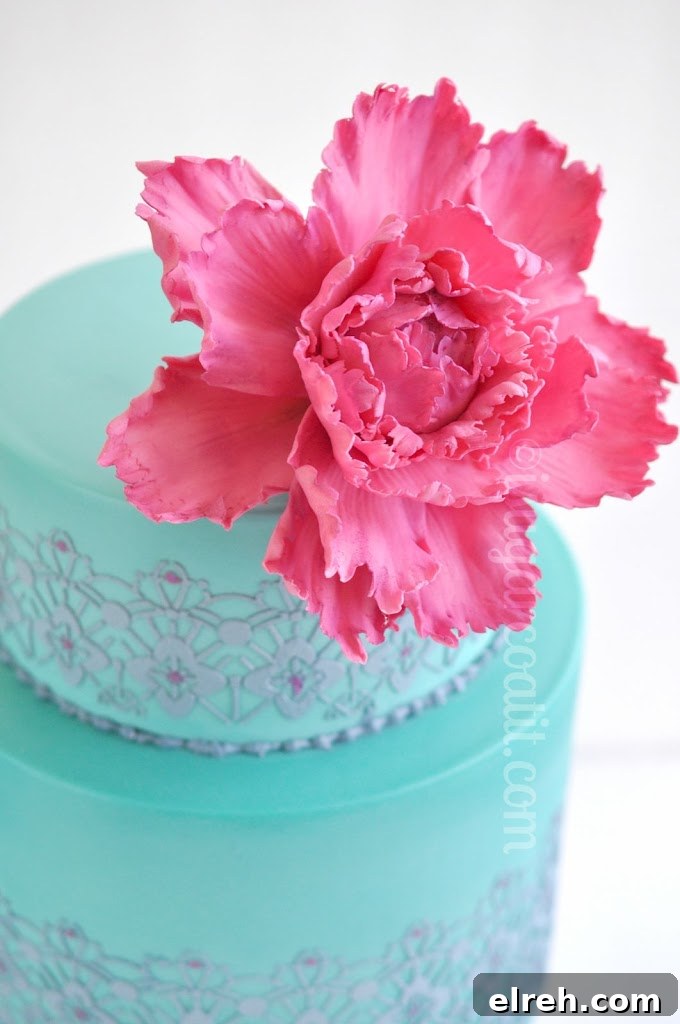
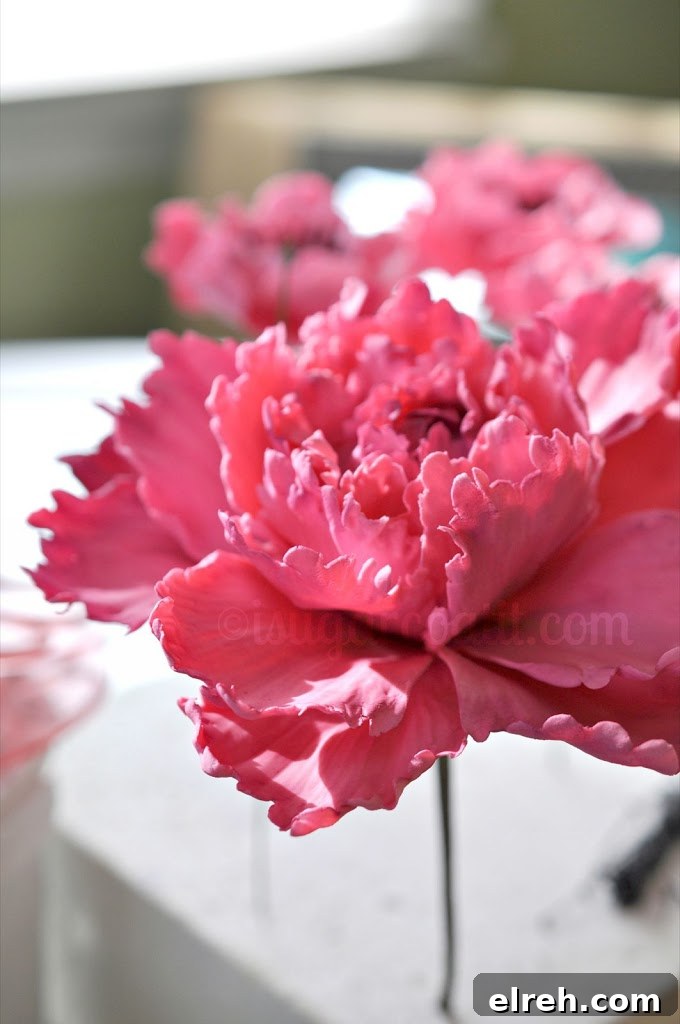
Some of you may have seen my teaser on social media for this sugar flower. It finally came together with a teal, stenciled cake to celebrate a bride-to-be at her bachelorette party. The cake paired a large pink sugar peony with a stenciled Victorian lace pattern for a feminine, elegant look.
Lately I’ve been on a flower-making kick. In the small hours when I should be sleeping, I’ve been quietly building a sugar garden: cabbage roses, anemones, dahlias, tulips, carnations, orchids and peonies. Each bloom teaches patience and respect for the craft. The more I practice, the more I admire bakers who have perfected sugar floristry.
Stenciling and Surface Decoration
Stenciling is one of my favorite decorating techniques. I’ve used edible paint, luster dusts and even cocoa in the past, but for this cake I used royal icing with a Victorian crochet lace stencil tinted gray to create a subtle lace effect on the teal fondant. I added soft pink accents by brushing edible luster dust mixed with a little vodka onto the raised stencil elements.
I attempted a piped pearl border, but I misjudged the royal icing consistency and it softened while drying. I didn’t have time to fix it before delivery, but it didn’t take away from the overall look. Imperfections can be part of handmade charm.
Marshmallow Fondant and Cake Construction
I used homemade marshmallow fondant to cover both tiers. It tastes much better than store-bought fondant, though it’s messier to make and can be sticky. I don’t make it often for that reason, but it’s more economical and has a nicer flavor, so I plan to use it more often.
The base tier is an 8″ double-barrel vanilla cake filled with raspberry and white chocolate Swiss meringue buttercream. The top tier is a 6″ cake with the same flavors. Both tiers were sealed in white chocolate ganache before being covered in fondant.
I named her Princess Peony — a teal and pink cake with girlish charm and a chocolatey, indulgent interior. She was made to celebrate a bride-to-be and to highlight sugar floristry and stenciling together.
Marshmallow Fondant Recipe
Ingredients
- 400 g mini marshmallows
- 30 ml water
- 1.5 g salt
- 1 ml pure lemon extract
- 30 ml clear corn syrup
- 5 ml pure vanilla extract
- 900 g confectioners sugar, sifted
- 118 ml vegetable shortening
- Gel colours of your choice
Method
- Grease a microwave-safe dish and spatula with vegetable shortening. Place marshmallows and water in the dish and microwave on high for one minute, then stir.
- Continue microwaving in 30-second intervals until the marshmallows are fully melted.
- Remove from the microwave and add gel color(s), salt, lemon extract, corn syrup and vanilla. Stir to combine.
- Add half the sifted confectioners sugar and mix until fully incorporated.
- Pour the remaining sugar onto a clean counter. Turn the fondant onto the sugar and slowly knead from the outside in, incorporating most of the sugar.
- Rub your hands with vegetable shortening and continue kneading until the fondant is smooth and the sugar is well incorporated. Add a little shortening as needed to keep the fondant pliable.
- Coat the fondant with a thin layer of shortening, wrap in two layers of plastic wrap, place in a zip-top bag, and let rest at room temperature overnight before use.
Notes
Recipe adapted from commonly used marshmallow fondant methods. Resting overnight helps the fondant develop a workable texture and reduces stickiness.
Best wishes to the bride-to-be — may your celebrations be sweet and full of joy. If you’re experimenting with stenciling or sugar flowers, I encourage you to try marshmallow fondant and take your time with each petal. The process is part of the reward.