Choosing the perfect avocado can feel tricky, especially when you need one that is ready to use the same day. Many shoppers bring avocados home only to discover they are too firm, too soft, or already brown inside. If you have ever planned a meal around guacamole, tacos, toast, salads, or sandwiches, you know how important it is to pick an avocado at the right stage of ripeness. The good news is that avocados do not have to be confusing. With a few simple tips, you can learn how to choose a ripe avocado with more confidence and avoid wasting food.
How to Tell if an Avocado is Ripe
Fresh avocados are unusual because they do not ripen on the tree in the same way many other fruits do. After harvesting, they begin to soften and develop the creamy texture people love. While some fruits can be picked and eaten immediately, avocados usually need time to reach their best eating stage.
Many people try to judge avocado ripeness by skin color alone, but color can be misleading. Some avocado varieties darken as they ripen, while others stay green even when they are ready to eat. The most reliable way to tell if an avocado is ripe is by checking how it feels. A ripe avocado should yield slightly to gentle pressure without feeling mushy or leaving a deep dent.
Related: Mushroom Vegan Tacos
How to Pick the Perfect Avocado
When shopping for avocados, your goal is to match the fruit to your meal plan. If you need an avocado today, look for one that feels slightly soft near the stem but not squishy. If you are planning meals several days ahead, a firmer avocado is a better choice because it will continue to ripen at home. The following tips can help you select the best avocado at the grocery store or farmers market.
Press Down by the Stem
Avocados bruise easily, so avoid squeezing them hard. A strong squeeze can damage the flesh and cause brown spots inside. Instead, use very light pressure near the top of the avocado, close to the stem. Think of the amount of pressure you would use to click a computer mouse.
If the avocado gives slightly and keeps its shape, it is likely ripe and ready to eat. If it feels rock hard, it needs more time. If your finger leaves a noticeable dent or the fruit feels very soft, the avocado may be overripe and could be brown or stringy inside.
Avoid Dark Blemishes
Although color is not the only sign of ripeness, the appearance of the skin can still provide helpful clues. Avoid avocados with large dark blemishes, sunken spots, cracks, or areas that look damaged. These marks may indicate bruising or that the avocado is past its best quality. A few natural marks on the skin are usually not a problem, but soft dark patches should be a warning sign.
Don’t Worry About Texture
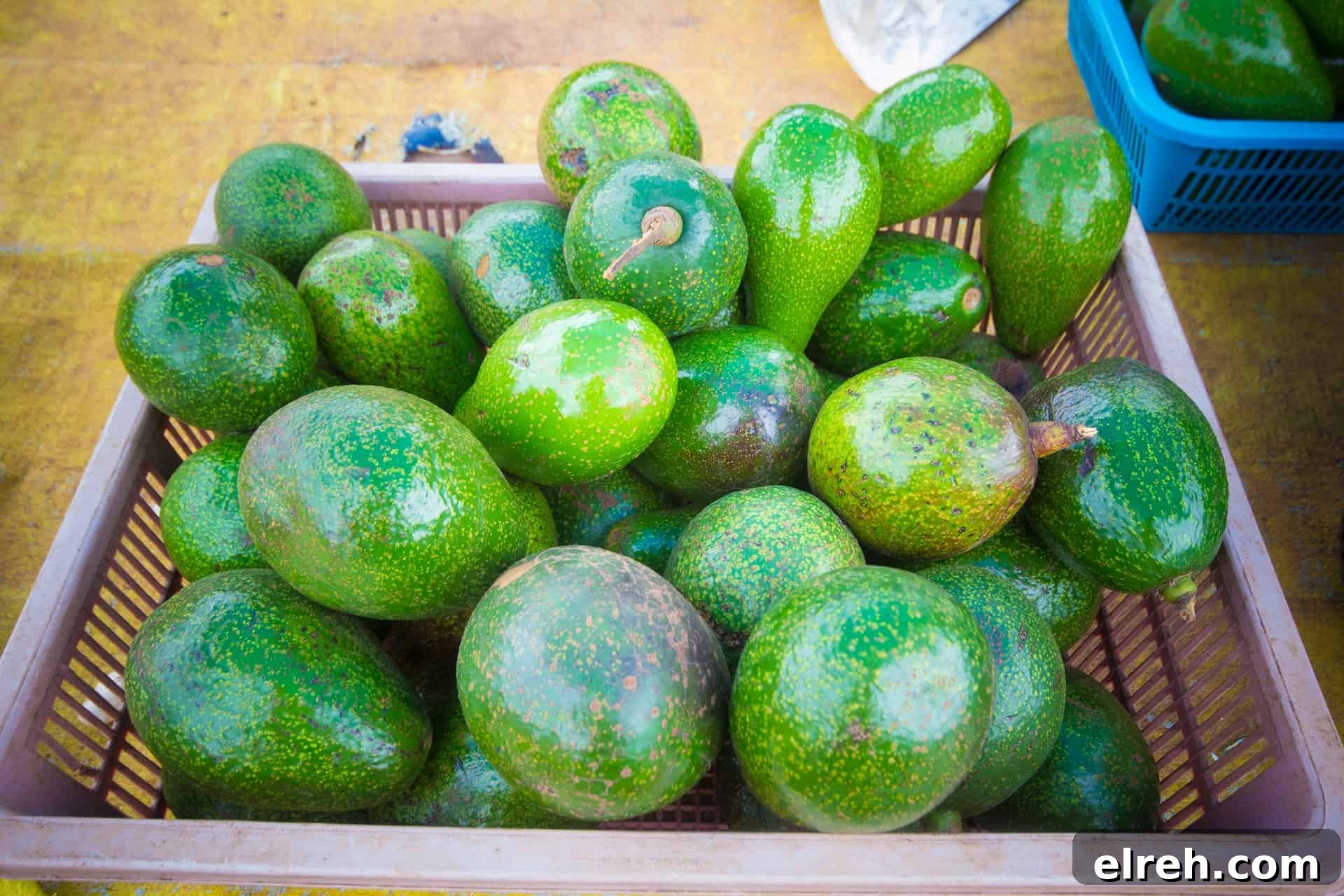
The texture of avocado skin is not a dependable ripeness test. Different avocado varieties naturally have different skin types. Hass avocados often have a pebbled surface, while tropical avocados may have smoother skin. A rough or smooth peel does not automatically mean the fruit is ripe, unripe, or overripe. Always rely more on gentle pressure than on the skin’s texture.
Related: Learn more about the tropical avocado here!
Don’t Rely on Color
Avocado color varies by type, so there is no single color that guarantees ripeness. A Hass avocado often becomes very dark as it ripens, but other varieties may remain green or change only slightly. Because there are many avocado varieties, judging by color alone can lead to mistakes. If you know the variety you are buying, color may offer a clue, but the gentle pressure test is still the best way to check whether an avocado is ready to eat.
Shake things up in your kitchen! Check out all the delicious recipes from The Produce Moms®!
Be Patient
If the avocados at the store are too firm, patience may be the best option. Firm, unripe avocados can take several days to soften after purchase. Keep them at room temperature on the kitchen counter and check them daily. Do not place unripe avocados in the refrigerator, because cold temperatures can slow the ripening process.
Once an avocado reaches the right level of softness, use it soon or move it to the refrigerator to help slow further ripening. This can give you a little more time before it becomes overripe.
The Key Indicators of Ripeness
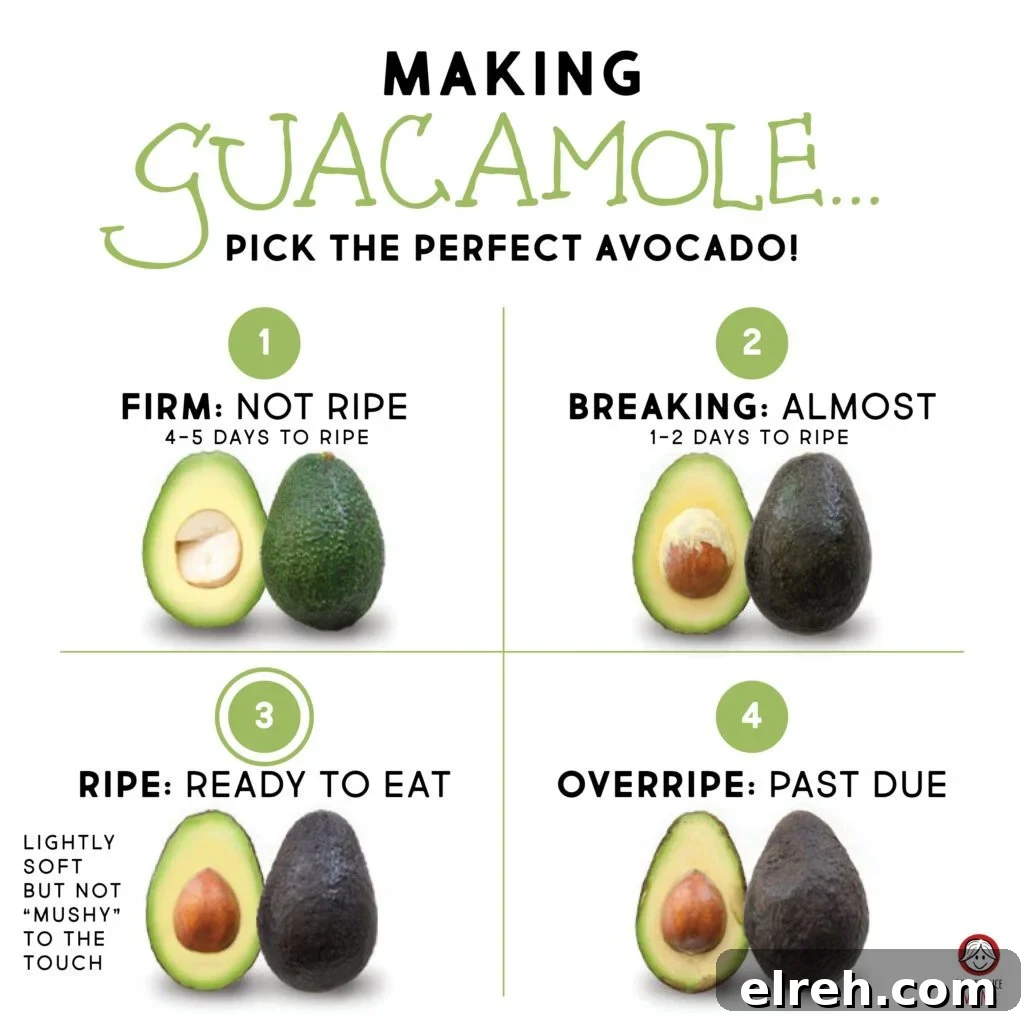
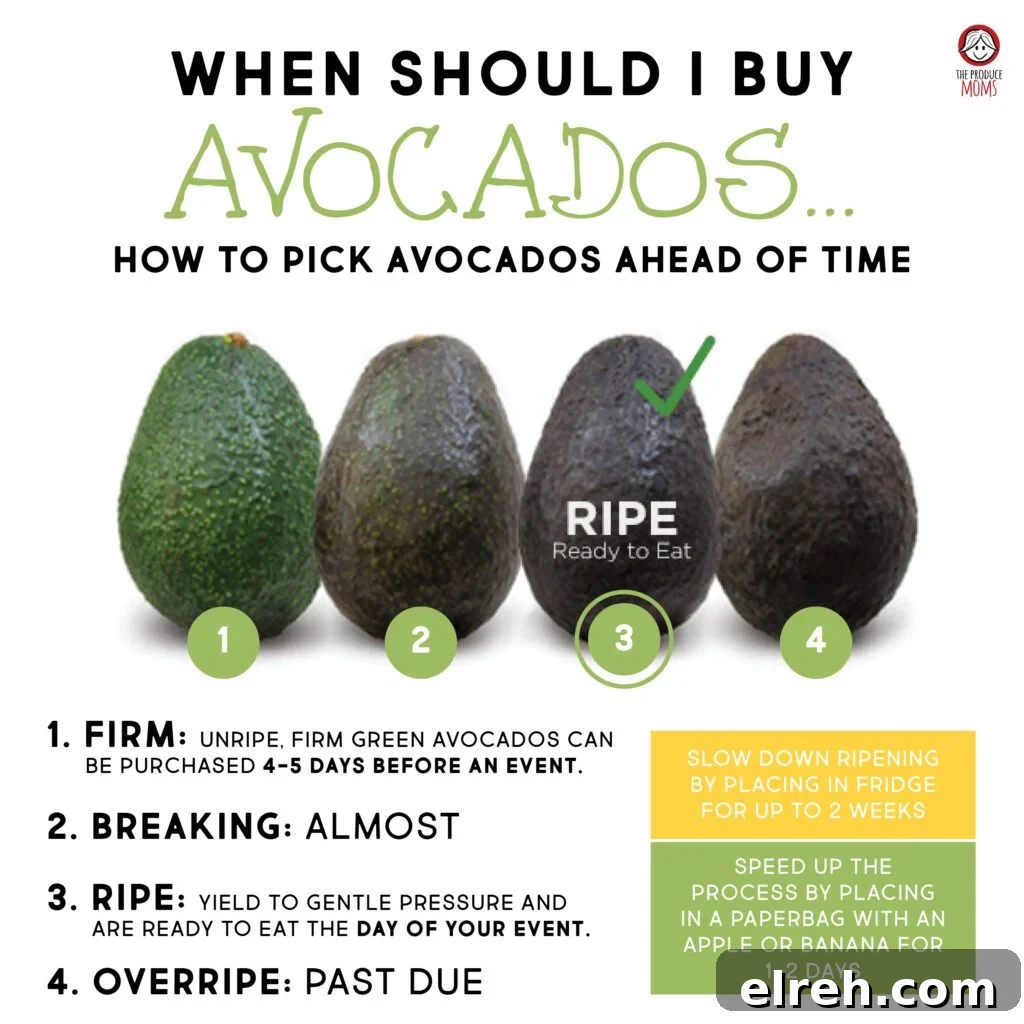
Because color and skin texture are not always reliable, it helps to understand the main stages of avocado ripeness. Knowing these stages makes it easier to buy avocados for today, tomorrow, or later in the week.
Firm Not Ripe
A firm avocado does not yield to gentle pressure and is not ready to eat. These avocados are best when you are shopping a few days in advance. Firm avocados are often bright green, depending on the variety, but firmness is the key sign. To help speed up ripening, place the avocado in a brown paper bag with an apple or banana. These fruits release ethylene gas, which can help the avocado soften more quickly.
Breaking -Almost Ripe
An avocado that is “breaking” is almost ripe. It may feel slightly softer than a firm avocado but still not soft enough to eat comfortably. This stage is ideal if you plan to use the avocado within a day or two. Leave it at room temperature and check it regularly so it does not pass the ripe stage before you are ready to use it.
Related: Learn how to select the perfect avocado here!
Ripe Ready to Eat
A ripe avocado gives slightly when you apply gentle pressure, but it should not feel mushy. This is the best stage for slicing, mashing, spreading, or adding to recipes. If you plan to eat the avocado the same day, keep it at room temperature. If you need to save it for later, place it in the refrigerator to slow down further ripening.
Overripe Past Ripe
An overripe avocado feels very soft or mushy and may have sunken areas on the skin. It can also have an unpleasant smell. When cut open, the flesh may be brown, watery, stringy, or spoiled. If an avocado smells bad or looks spoiled, it is best not to eat it.
Final Thoughts
Learning how to pick a ripe avocado becomes easier once you stop relying only on color and focus on feel. Because avocado varieties differ in appearance, size, and skin texture, the gentle pressure test is the most dependable method. Press lightly near the stem, avoid fruit with deep blemishes or mushy spots, and choose firmness based on when you plan to eat it.
If you need an avocado right away, choose one that yields gently without feeling soft all over. If you are planning ahead, buy firmer avocados and let them ripen on the counter. With these simple avocado shopping tips, you can enjoy better texture, better flavor, and less waste in your kitchen.
Why not join the mission with The Produce Moms® and add more fruits and veggies to your family’s diet? From learning about fresh produce to bringing it to the dinner table, you can educate yourself and your family here!