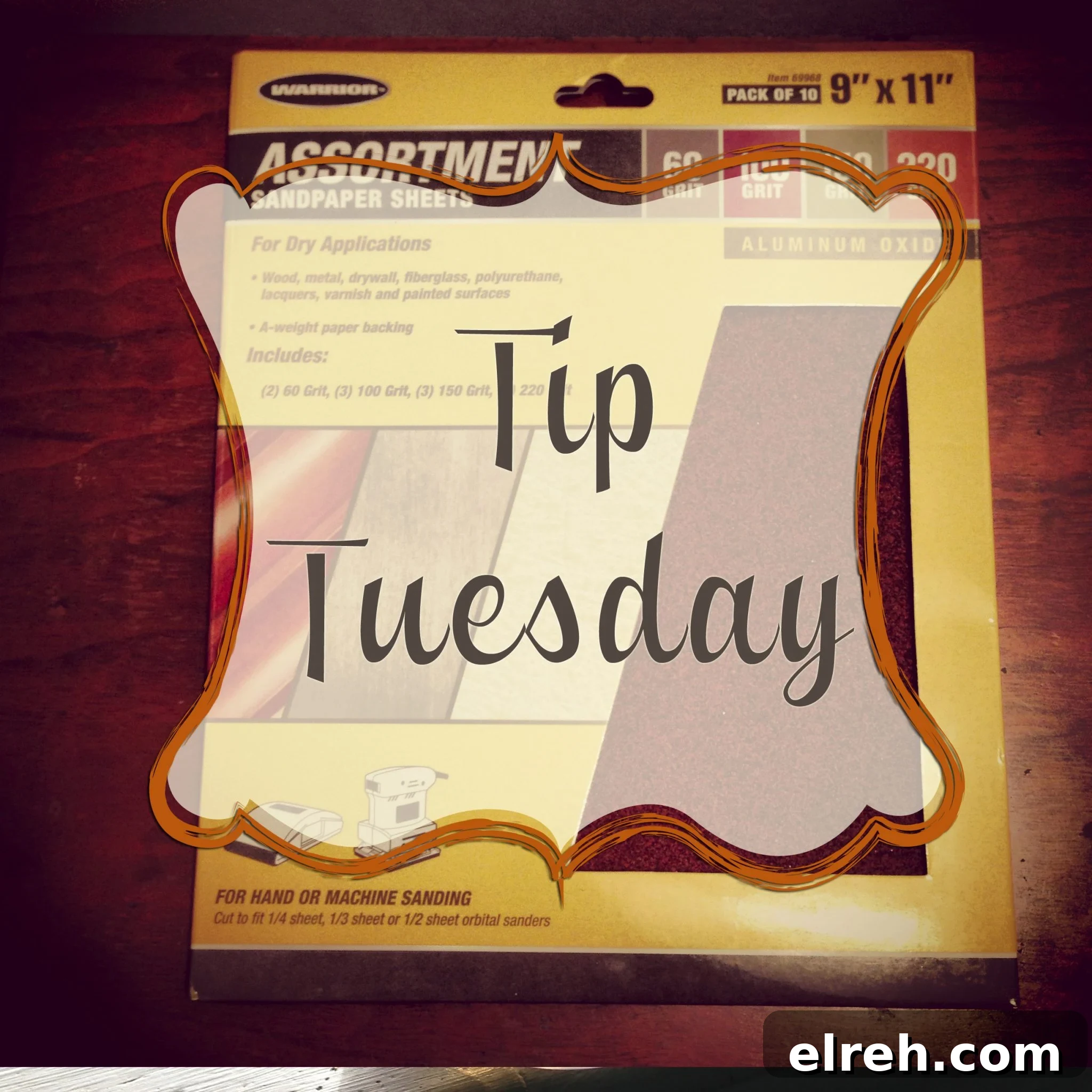
I’m excited that Tip Tuesday this week comes from Jeff Beaton, owner of jmb furnitureworks. He’s my go-to resource for advice on upcycling and restoring old pieces.
After you finish a repair or restoration and start preparing a piece for paint or a clear finish, it’s tempting to rush through sanding to get to the dramatic final coat. While finish can deliver immediate, eye-catching results, careful sanding and preparation make the ultimate result far better and more professional-looking.
One common mistake in furniture restoration and upcycling is skipping sanding steps or beginning with too fine a grit. For most wooden surfaces, begin with a 100-grit abrasive to remove surface roughness, old finish remnants, and deeper scratches. From there, progress through 120, 150, 180, and finish with 220 grit. Each step removes the scratches left by the previous grit and progressively smooths the surface. Although it may feel like extra work, this sequence actually saves time: the coarse grit removes material quickly and levels the surface, and the finer grits then only need to eliminate the shallower scratches created by the previous paper. If you start at 150 or skip grits, you’ll often spend far more time trying to remove larger scratches and you may end up with an uneven surface that telegraphs through the finish.
Sanding technique matters as much as grit selection. Always sand with the grain to avoid cross-grain scratches. For flat panels, a sanding block or a random orbital sander gives consistent results and helps maintain even pressure. Use hand sanding for delicate details, curved edges, and trim to avoid rounding sharp profiles unintentionally. Keep the sandpaper clean and replace it when it becomes loaded with dust—clogged paper stalls and produces uneven abrasion.
Between sanding passes, remove dust thoroughly. Vacuum the work area, then wipe surfaces with a tack cloth or a lint-free rag slightly dampened with mineral spirits (if compatible with the planned finish) to lift fine dust. Dust left under paint or stain will dull the final look and create a rough feel. For projects where you’ll be staining or applying a clear finish, consider a final wipe with a tack cloth just before applying the first coat to ensure the surface is pristine.
If you encounter dents, gouges, or nail holes, repair them before final sanding. Use an appropriate wood filler or grain filler, allow it to cure fully, then sand back gently and blend the repair with the surrounding wood. When working with reclaimed or previously painted pieces, test a small hidden area first to see how the wood accepts stain or paint—porosity can vary and may affect absorption and final color.
Be mindful of sanding pressure. Heavy pressure with coarse grit is useful to shape or remove old finish, but lighter, even pressure with the finer grits yields a smooth, consistent surface. After you reach 220 grit, inspect the piece under good lighting. Run your hand over the surface to feel for any remaining rough spots, and hold the piece at different angles to catch reflected light that reveals scratches or low areas.
Take your time with preparation—proper sanding and cleaning translate directly into a better finish, whether you’re painting, staining, or applying a clear coat. The extra minutes you invest in careful sanding, dust removal, and inspection pay off with a smoother application, truer color, and a more durable, attractive result. Good luck with your next upcycling or restoration project!