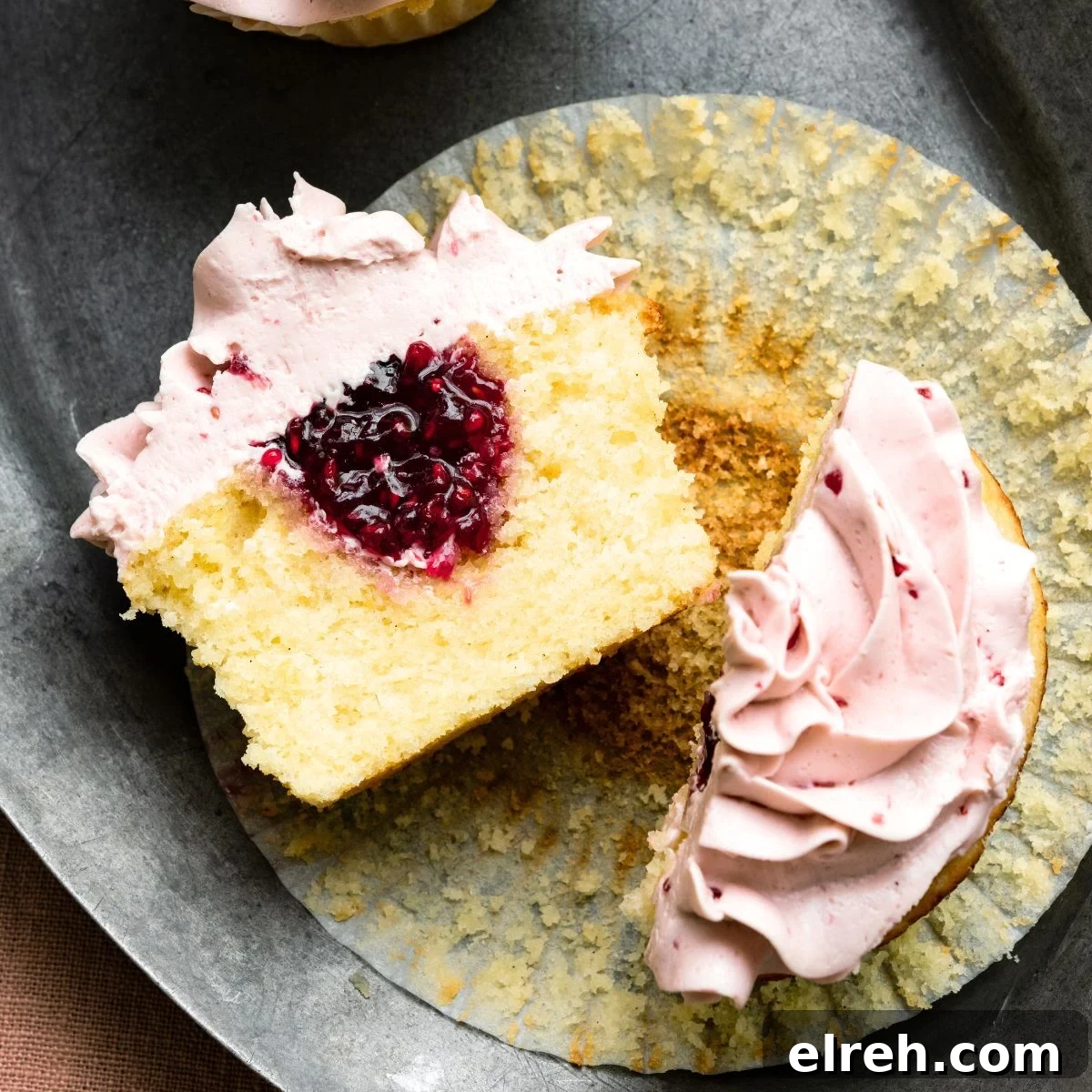
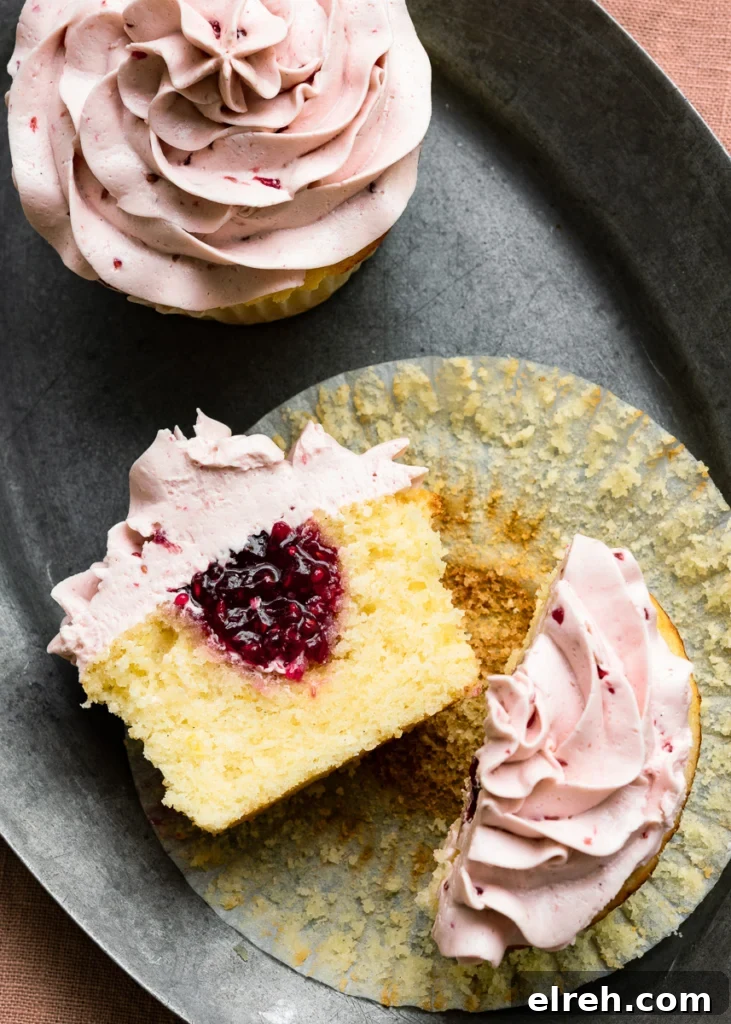
This is my take on raspberry lemonade presented as a moist, tender cupcake. The cake batter is bright with fresh lemon zest and lemon juice, the center is filled with raspberry jam, and the cupcakes are finished with a light, silky raspberry Swiss meringue buttercream. These lemon and raspberry cupcakes are an elegant, spring-inspired dessert that balance sweet and tart flavors.
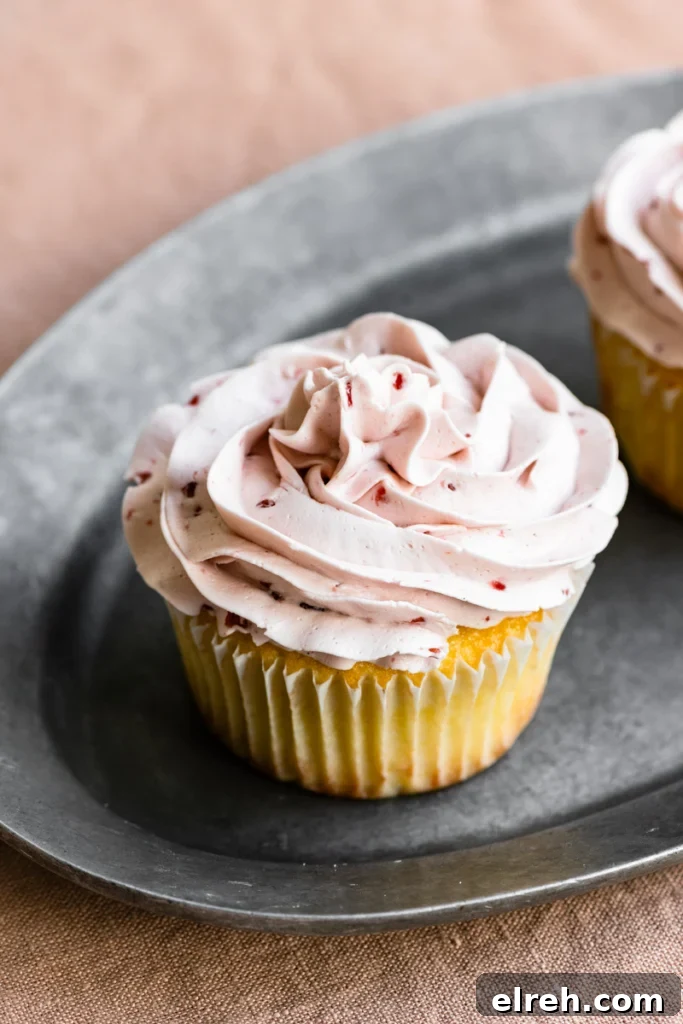
This recipe is adapted from a strawberry lemonade cake but simplified for cupcakes with a lighter frosting. To keep the crumb tender, I use the reverse creaming method, which means coating the flour with butter and sugar first, then adding eggs and buttermilk. Coating the flour with fat reduces gluten formation so the cupcakes stay soft, fluffy, and moist.
Swiss meringue buttercream can seem intimidating, but it’s a forgiving, silky frosting once you know the basic technique. If it seems slow to come together, follow the troubleshooting steps in the buttercream tips below. The result is a lightly sweet, elegant frosting that pairs perfectly with lemon and raspberry.
Key Ingredients & Test Notes
- All-Purpose Flour: Use a flour with about 10–11% protein for a soft, tender crumb.
- Unsalted Butter: European-style butter (about 82% butterfat) adds richness to both cake and buttercream.
- Granulated Sugar: Rub the lemon zest into the sugar with your fingertips to release the citrus oils and strengthen the lemon flavor.
- Large Eggs: Use room-temperature eggs for the batter and room-temperature egg whites for the Swiss meringue.
- Buttermilk: Adds moisture and a slight tang that complements the lemon.
- Fresh Lemons: Zest and juice from fresh lemons provide the best flavor; no extract is needed.
- Raspberry Preserves: A preserves with raspberry pieces gives the best texture and flavor. Store-bought preserves are typically sweeter than homemade—adjust to taste.
Jenn’s Tips!
- Use high-quality butter: For the best flavor, choose a European-style butter if possible.
- Softened butter is essential: Butter straight from the fridge won’t incorporate well. Allow it to soften at room temperature for at least an hour.
- Infuse the sugar with lemon: Rubbing zest into the sugar with your fingertips releases essential oils and intensifies lemon flavor throughout the cake.
Raspberry Swiss Buttercream Tips
- Clean your equipment: Any oil residue can prevent egg whites from whipping properly. Wipe the mixing bowl and whisk briefly with a little lemon juice or vinegar and dry thoroughly.
- Butter temperature: Soften butter to room temperature but avoid letting it get warm or oily. If short on time, microwave briefly in short bursts until just soft.
- Check meringue temperature: Whip the egg whites and sugar into a glossy meringue with stiff peaks. The bowl should be near room temperature before adding butter; a thermometer reading of roughly 75°F (23°C) is a good guide.
- Curdled appearance is normal: The mixture may look soupy or curdled after adding butter. Keep whipping—the texture usually comes together after continued mixing.
- If the buttercream is too cold: If the buttercream stays curdled after about 5–10 minutes of mixing, warm the bowl slightly (over a double boiler at the edges or by briefly warming a portion of the meringue in the microwave) and then whip again.
- If the buttercream is too warm: Chill the bowl in the refrigerator for 10 minutes and then whip on high until smooth if the frosting feels soft or greasy.
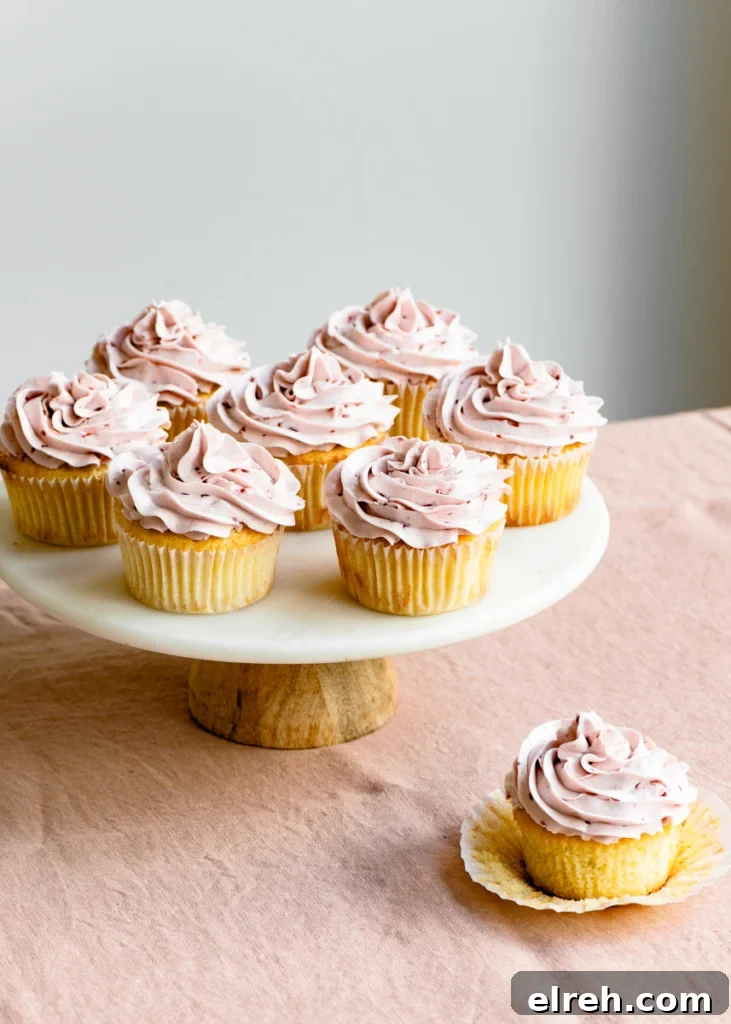
Lemon and Raspberry Cupcakes
Prep: 25 mins Cook: 25 mins Total: 50 mins
Yield: 8 large or 12 regular cupcakes
Equipment
- Stand mixer (or electric mixer)
- 12-cavity cupcake pan (or 6-cavity jumbo muffin pan)
- Paper cupcake liners
- Piping bag and piping tip
- Kitchen scale (recommended for accuracy)
- Mixing bowls and a whisk
Ingredients
Cupcake Batter
- 250 grams (2 cups) all-purpose flour, 10–11% protein
- 1 ¼ teaspoons baking powder
- 1/2 teaspoon baking soda
- 1/2 teaspoon fine sea salt
- 267 grams (1 ⅓ cups) granulated sugar
- 3 tablespoons fresh lemon zest
- 113 grams (½ cup) unsalted European-style butter, softened
- 3 large eggs, room temperature
- 1 teaspoon vanilla bean paste
- 60 grams (¼ cup) fresh lemon juice, room temperature
- 160 grams (⅔ cup) buttermilk, room temperature
- Raspberry jam, for filling
Raspberry Swiss Meringue Buttercream
- 180 grams (6 large) egg whites, room temperature
- 300 grams (1 ½ cups) granulated sugar
- 450 grams (2 cups) unsalted butter, softened
- 2 teaspoons vanilla bean paste
- 1/2 teaspoon fine sea salt (optional — adjust to taste)
- 213 grams (⅔ cup) raspberry jam
Toppings
- Fresh raspberries
Instructions
Raspberry Jam Cake Filling
- Combine raspberries, sugar, and a splash of lemon juice in a medium saucepan over medium heat. Cook for about 10–12 minutes, stirring and mashing the berries to break them down.
- Whisk cornstarch with a little water, stir into the jam, and cook 1–2 minutes more until it thickens. If desired, press the warm jam through a fine mesh sieve to remove seeds.
- Transfer the jam to a heat-proof container and cool completely. The jam can be made ahead and stored in an airtight container in the refrigerator.
Cupcake Batter
- Preheat the oven to 350°F / 180°C (160°C fan/convection). Line a 12-cup cupcake pan or a 6-cup jumbo muffin pan with liners.
- Whisk together the flour, baking powder, baking soda, and salt in a medium bowl and set aside.
- In the bowl of a stand mixer, combine the sugar and lemon zest. Rub the zest into the sugar with your fingertips to release the oils. Add the flour mixture and mix on low with the paddle attachment to distribute.
- Add the softened butter and mix until just combined, about 1 minute; the texture will be somewhat shaggy.
- Whisk the eggs and vanilla in a small bowl. Add the egg mixture to the batter and beat on medium-high for 2–3 minutes until light and fluffy, scraping the bowl as needed.
- Slowly add the lemon juice and buttermilk, mixing until the batter is smooth. Scrape the sides and bottom of the bowl to ensure everything is incorporated.
- Divide batter among liners, filling each about 3/4 full to allow for a small dome. Bake regular 12-cavity cupcakes for 15–18 minutes, or 8-cavity jumbo cupcakes for 20–25 minutes, until lightly golden and a toothpick inserted into the center comes out clean.
- Cool cupcakes in the pan on a wire rack for 10 minutes, then remove and cool completely before filling and frosting.
Fill the Cupcakes
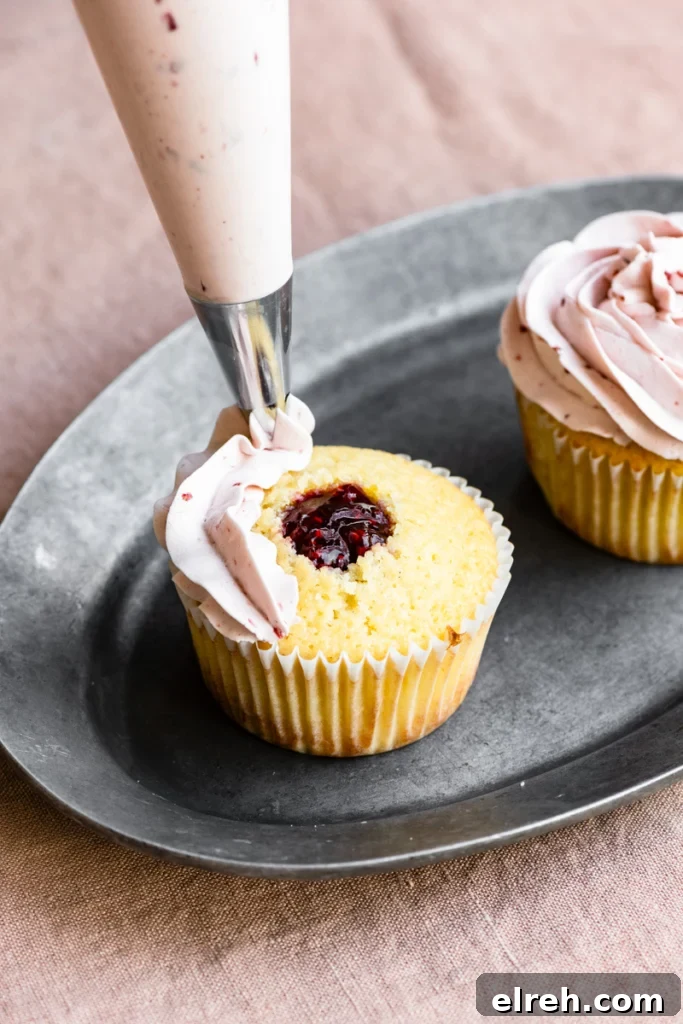
- Use a small knife or a spoon to remove a small circle from the center top of each cupcake (about a teaspoon or two of cake). Fill each cavity with raspberry jam.
Raspberry Swiss Meringue Buttercream
- Wipe the mixing bowl and whisk attachment clean and dry. A quick wipe with a little lemon juice helps remove any residual oil.
- Place egg whites and sugar in the bowl. Set the bowl over a pot of gently simmering water (make a double boiler) and whisk constantly until the mixture reaches 160°F (72°C) and no sugar granules remain (about 6–8 minutes).
- Remove the bowl from the heat, dry the bottom, and whip the egg white mixture on medium-high until thick, glossy, and forming stiff peaks. The bowl should cool to near room temperature (about 10–15 minutes).
- Switch to the paddle attachment. With the mixer on medium speed, add softened butter one tablespoon at a time, allowing each addition to incorporate before adding the next. Halfway through, stop and scrape the bowl to ensure even mixing.
- The meringue may soften or look split during this process; continue mixing for another 10–15 minutes after all butter is added. If the buttercream doesn’t come together, chill the bowl for 10 minutes and then whip again until smooth.
- Once the buttercream is spreadable, add the vanilla bean paste and salt, then mix briefly. Stir in the raspberry jam on low speed until evenly distributed. If you want a deeper color, add a drop or two of gel food coloring.
- If the frosting has many air bubbles, mix briefly on low with the paddle attachment to smooth it out. Transfer buttercream to a piping bag and pipe onto each cupcake, starting at the outside edge and spiraling inward. Top with a fresh raspberry if desired.
Notes
- Oven: This recipe was tested for a conventional oven (top and bottom heat). If using a convection fan oven, reduce the temperature by 25°F and begin checking for doneness earlier.
Weigh your flour: For accuracy, use a kitchen scale. The amounts in this recipe were tested by weight. A commonly used conversion is 1 cup of all-purpose flour ≈ 125 grams, but flour weights can vary by brand and how the flour is measured.
Flour protein: Different flours have varying protein levels which affect texture. The recipe lists the recommended protein level used for testing. If you substitute a different flour, the result may vary slightly.
Tried this recipe? Mention @twocupsflour or tag #twocupsflour when you share your photos!