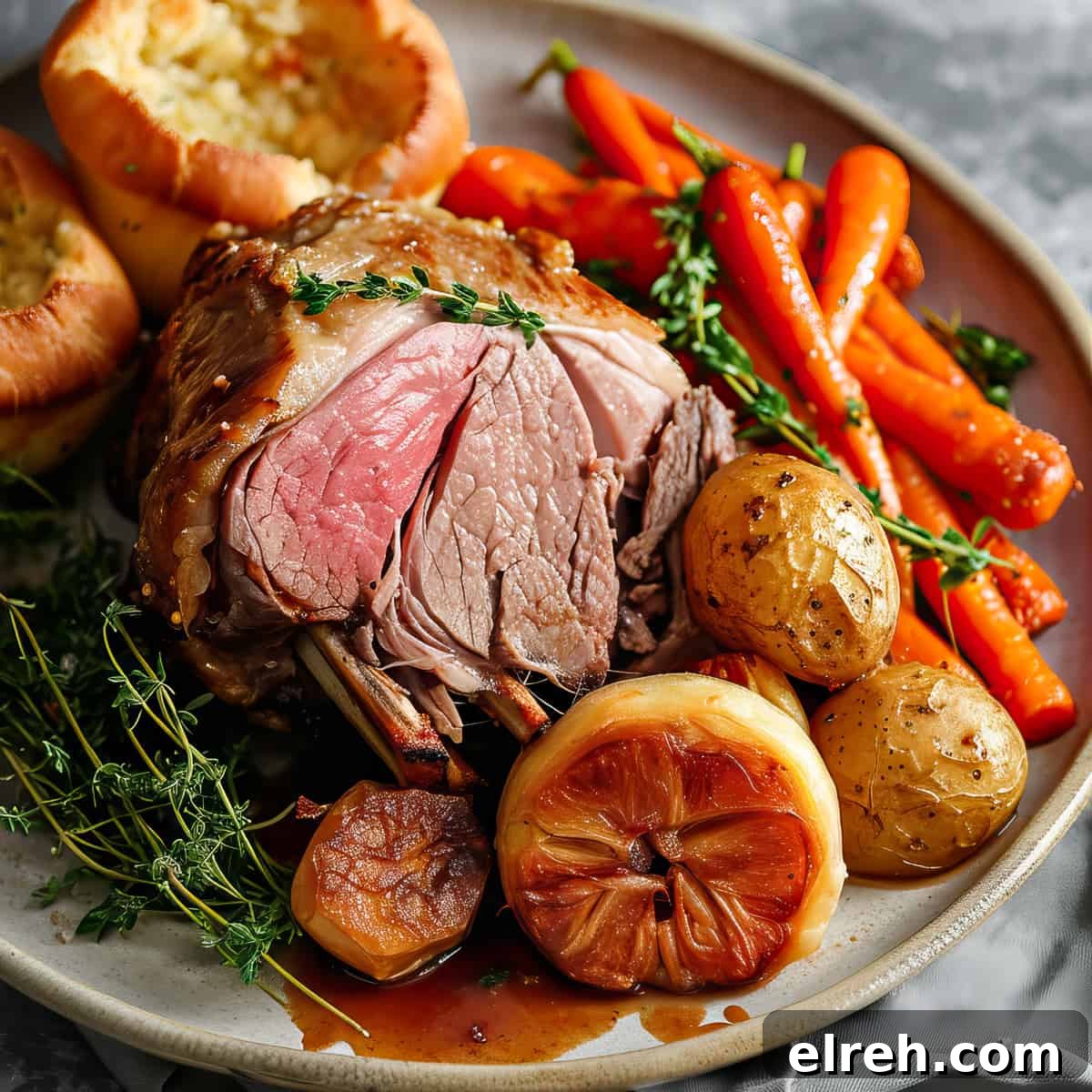
This tender roast leg of lamb is seasoned with garlic, rosemary and thyme, then roasted until meltingly soft. Serve it with classic trimmings—glazed carrots, roast potatoes, Yorkshire puddings and a splash of gravy—for a memorable Easter or Sunday roast.
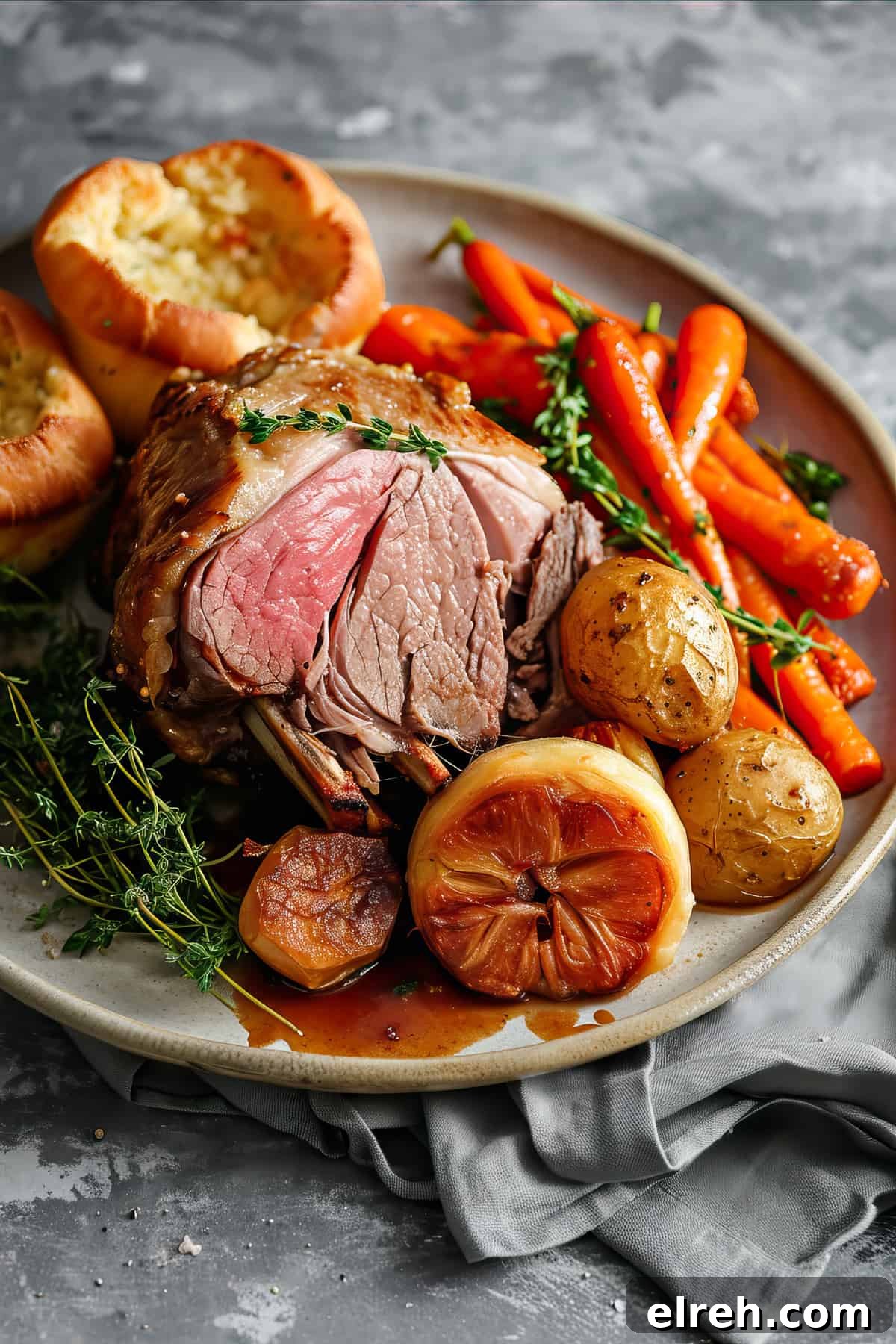
⭐️ Why this recipe works
- Low maintenance: Once the lamb is in the oven it needs little attention, freeing you to prepare sides or relax with guests.
- Full of flavour: Garlic, rosemary and thyme enhance the natural taste of the lamb without overpowering it.
- Impressive but easy: The result looks and tastes like a restaurant roast while being straightforward to prepare.
- Perfect for special occasions: Ideal for Easter, holidays or a family Sunday dinner.
🧾 Ingredients overview
- Boneless leg of lamb: The main ingredient—tender and juicy when roasted correctly.
- Garlic: Thinly sliced for a mild roasted garlic note.
- Rosemary and thyme: Classic herbs that pair beautifully with lamb.
- Onions: Sliced to form a flavourful bed in the roasting tray.
Exact quantities and the full ingredient list are included in the recipe card below.
👩🏻🍳 Here’s how to make it
Roast leg of lamb — step by step
- Prepare the stuffing
- Heat olive oil in a skillet over medium heat. Add sliced garlic and cook until lightly golden, about 1–2 minutes.
- Add chopped rosemary, picked thyme leaves and packed spinach. Cook just until the spinach begins to wilt, 2–3 minutes.
- Stir in the zest of one lemon, mix well, then remove from the heat and let cool.
- Prepare the lamb
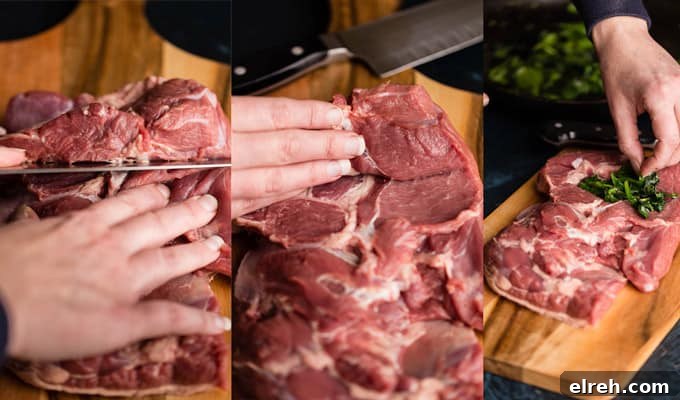
- If needed, butterfly the boneless leg to an even thickness for consistent cooking.
- Season both sides generously with salt and pepper.
- Spread the cooled spinach mixture across the lamb, roll it up and secure with butcher’s twine. Tuck two whole rosemary sprigs into the twine for extra aroma.
- Roast
- Preheat the oven (see roasting times below). Arrange thinly sliced onions in an even layer on a roasting tray and place the lamb on top.
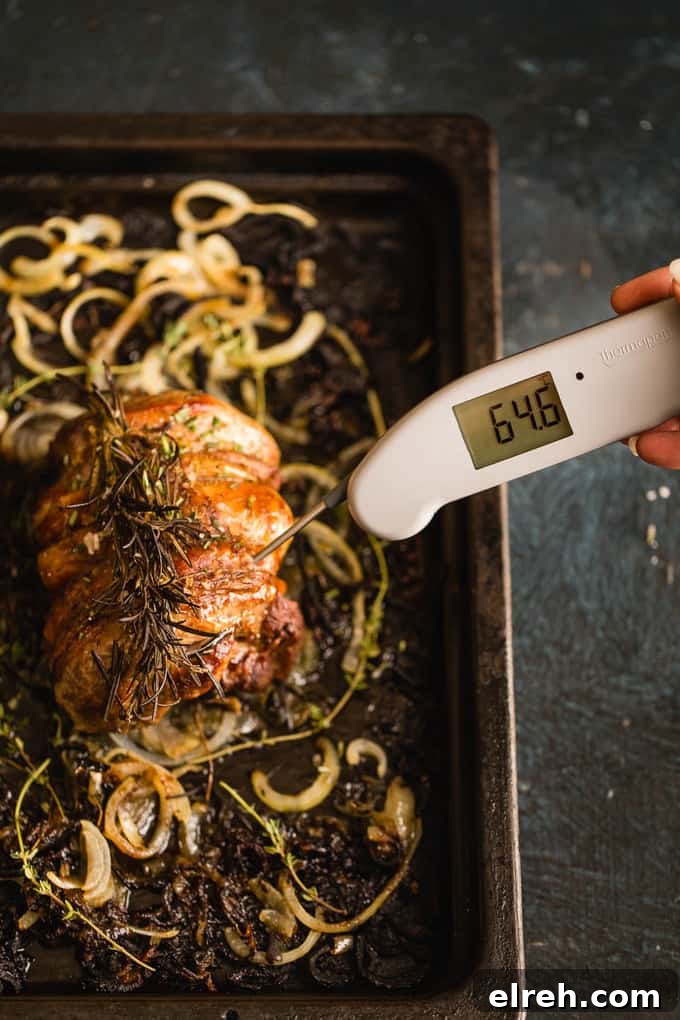
- Roast, using the timing guideline of 30 minutes per pound plus an extra 30 minutes as a starting point—always confirm doneness with a meat thermometer.
- Once cooked, allow the lamb to rest tented in foil for at least 15 minutes before carving to ensure juicy slices.
- Make the gravy
- Use the pan drippings and cooked onions to make a simple gravy. Stir in a little flour and stock (or water) over low heat until thickened, then season to taste.
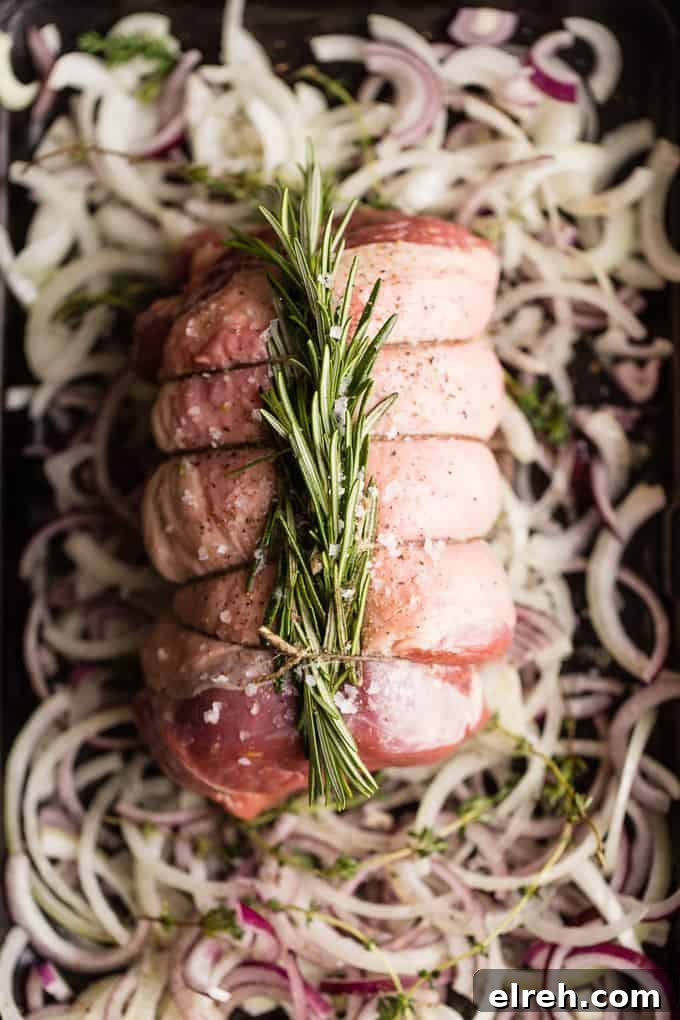
📖 Guide to lamb roasting times
- Oven temp: 350°F (175°C) is a good baseline; for extra tenderness try slow roasting at 325°F (165°C).
- Bring to room temperature: Remove the lamb from the fridge about an hour before roasting for even cooking.
- Use a rack: A roasting rack helps air circulate and encourages even browning and self-basting.
- Resting time: Rest the roast for at least 15 minutes before carving.
- Timing guide (boneless leg at 350°F / 175°C):
- Rare (120–130°F / 49–54°C): 20–25 minutes per pound
- Medium-rare (130–135°F / 54–57°C): 25–30 minutes per pound
- Medium (135–145°F / 57–63°C): 30–35 minutes per pound
- Medium-well (145–150°F / 63–66°C): 35–40 minutes per pound
- Well done (150–160°F / 66–71°C): 40–45 minutes per pound
💡 Chef’s Guide: Expert tips
These practical tips, honed in professional kitchens, will help you roast the perfect leg of lamb.
- Season early: Salt the lamb at least two hours before cooking or overnight for deeper flavour penetration.
- Room temperature: Let meat sit at room temperature for about an hour before roasting to ensure even cooking.
- Sear for colour: Searing the lamb in a hot skillet before roasting creates a tasty crust and helps lock in juices.
- Low and slow: Slow roasting at a lower temperature (around 325°F / 165°C) yields very tender, even results.
- Use a thermometer: Probe the thickest part of the roast (not touching the bone) to confirm doneness.
- Rest the meat: Rest 15–20 minutes covered loosely with foil so juices redistribute before carving.
- Carve against the grain: Slice perpendicular to the muscle fibers for the most tender bites.
🍯 Storing and reheating leftovers
- Fridge: Store leftovers in an airtight container for up to 3 days.
- Freezer: Freeze portions in airtight packaging for up to 3 months.
- Reheat: Gently reheat in the oven or on the stove. Leftover lamb also works well in stews, soups or sandwiches.
❓ Recipe FAQ’s
Yes. Season and stuff the lamb, then wrap and refrigerate overnight. Bring it back to room temperature before roasting for even cooking.
Yes. Kale or Swiss chard make good alternatives—just wilt them first so they don’t release excess moisture during roasting.
Tent the lamb loosely with foil to slow the browning while the interior reaches the desired temperature.
Absolutely. Oregano, marjoram or a pinch of ground cumin or coriander all work well if you want a different flavour profile.
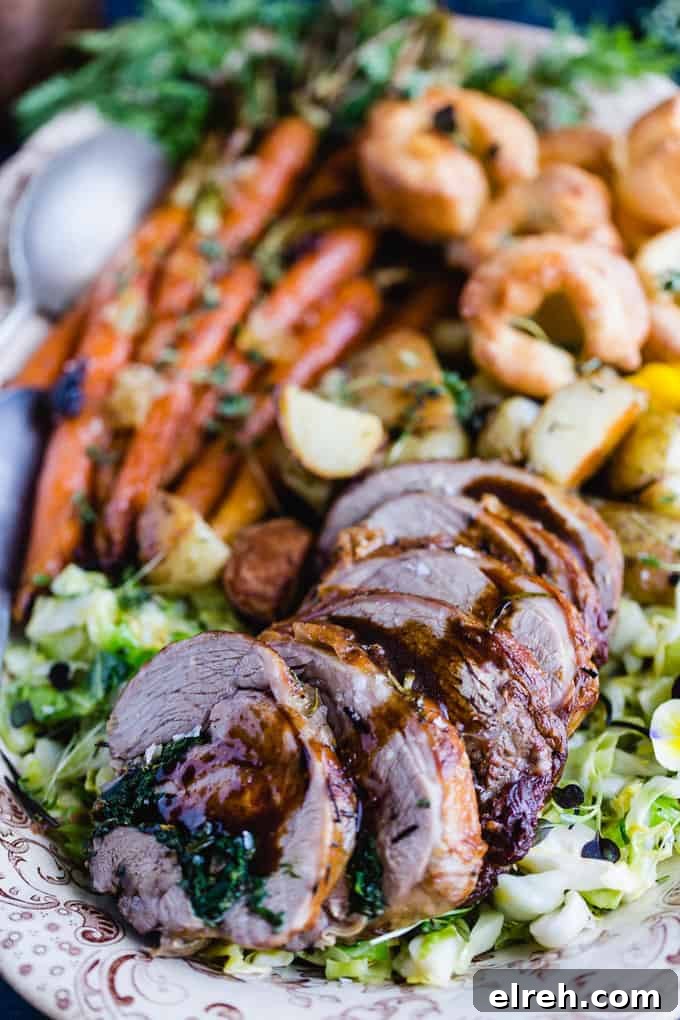
Serve this lamb with honey-thyme glazed carrots, crispy roast potatoes and delicate Yorkshire puddings for a classic roast dinner.
If you try this recipe, please leave a star rating and share a photo—I love seeing your results!
Follow the chef on social media for more recipes and kitchen tips (search for salted_mint).
Simple Roast Leg Of Lamb With Garlic and Rosemary
Tender roast leg of lamb flavored with garlic, rosemary and thyme. Served here with glazed carrots, roast potatoes and Yorkshire puddings.
Ingredients
- 1 kg (2 lb) boneless leg of lamb, butterflied and at room temperature
- 2 cups (60 g) packed spinach
- 2 cloves garlic, thinly sliced
- Zest of 1 lemon
- 3 sprigs rosemary (1 chopped, 2 left whole)
- 1 sprig thyme, leaves picked
- 3 onions, thinly sliced
- 2 Tablespoons olive oil
For the carrots
- 1 bunch carrots, washed and tops trimmed
- 1 Tablespoon olive oil
- 1 Tablespoon honey
- 1 sprig thyme, leaves picked
For the potatoes
- 2 cups (300 g) baby new potatoes, quartered
- 3 Tablespoons olive oil
- 1 sprig rosemary, chopped
For the cabbage
- 1 spring cabbage, sliced
- 2 cloves garlic, thinly sliced
- Zest of 1 lemon
For the Yorkshire puddings
- 100 ml milk
- 100 g plain flour
- 2 eggs
- 1 Tablespoon chopped thyme
- ¼ cup (56 g) oil, divided
Instructions
For the lamb
- Heat olive oil in a skillet over medium heat. Add garlic and cook until slightly golden. Add chopped rosemary, thyme and spinach; cook until just wilted. Stir in lemon zest and cool.
- Butterfly the leg of lamb if necessary. Season with salt and pepper. Spread the cooled spinach mixture over the lamb, roll and tie with butcher’s twine. Tuck two rosemary sprigs into the twine.
- Spread sliced onions in a roasting tray, season, and place the lamb on top. Roast using the timing guideline above and confirm with a thermometer.
- Rest the lamb for at least 15 minutes before carving. Reserve the pan juices and onions for gravy.
For the carrots
- Trim and wash the carrots; no need to peel young ones. Toss with olive oil and honey, scatter thyme leaves, and roast about 30 minutes until tender and caramelized.
For the potatoes
- Quarter and parboil the potatoes until mostly tender. Toss with olive oil, chopped rosemary, salt and pepper. Roast with the carrots until golden and crisp outside, fluffy inside.
For the cabbage
- Reuse the skillet from the spinach. Heat oil, add garlic and the sliced cabbage, then add lemon zest. Sauté until slightly caramelized at the edges and just tender. Keep warm.
For the Yorkshire puddings
- Whisk milk, flour, eggs and thyme together (do not add the oil). Let the batter rest if time allows.
- Divide a little oil between the cups of a 24‑cup mini muffin tin and heat in the oven until smoking hot (about 10 minutes).
- Pour the batter into the hot oil and bake for about 20 minutes. Do not open the oven in the first 10 minutes to avoid collapse.
Notes
- Ask your butcher to butterfly the leg if you’re not comfortable doing it yourself.
- Young carrots need only trimming and washing—no peeling required.
- Potatoes can be parboiled a day ahead and refrigerated until ready to roast.
- Yorkshire pudding batter can be made the day before; reheat puddings briefly for service if preferred.
Nutrition
Calories: 786 kcal | Carbohydrates: 51 g | Protein: 43 g | Fat: 45 g | Saturated Fat: 7 g
Cholesterol: 185 mg | Sodium: 186 mg | Potassium: 1235 mg | Fiber: 4 g | Sugar: 10 g
Vitamin A: 4480 IU | Vitamin C: 31.8 mg | Calcium: 148 mg | Iron: 6.7 mg

Meet the Chef!
Hi, I’m Debs. I’m Cordon Bleu trained and a recipe developer with years of experience in professional kitchens. I create reliable, flavourful recipes and share practical tips to help you get great dinners on the table with confidence.
Learn more about the author on the site’s About page