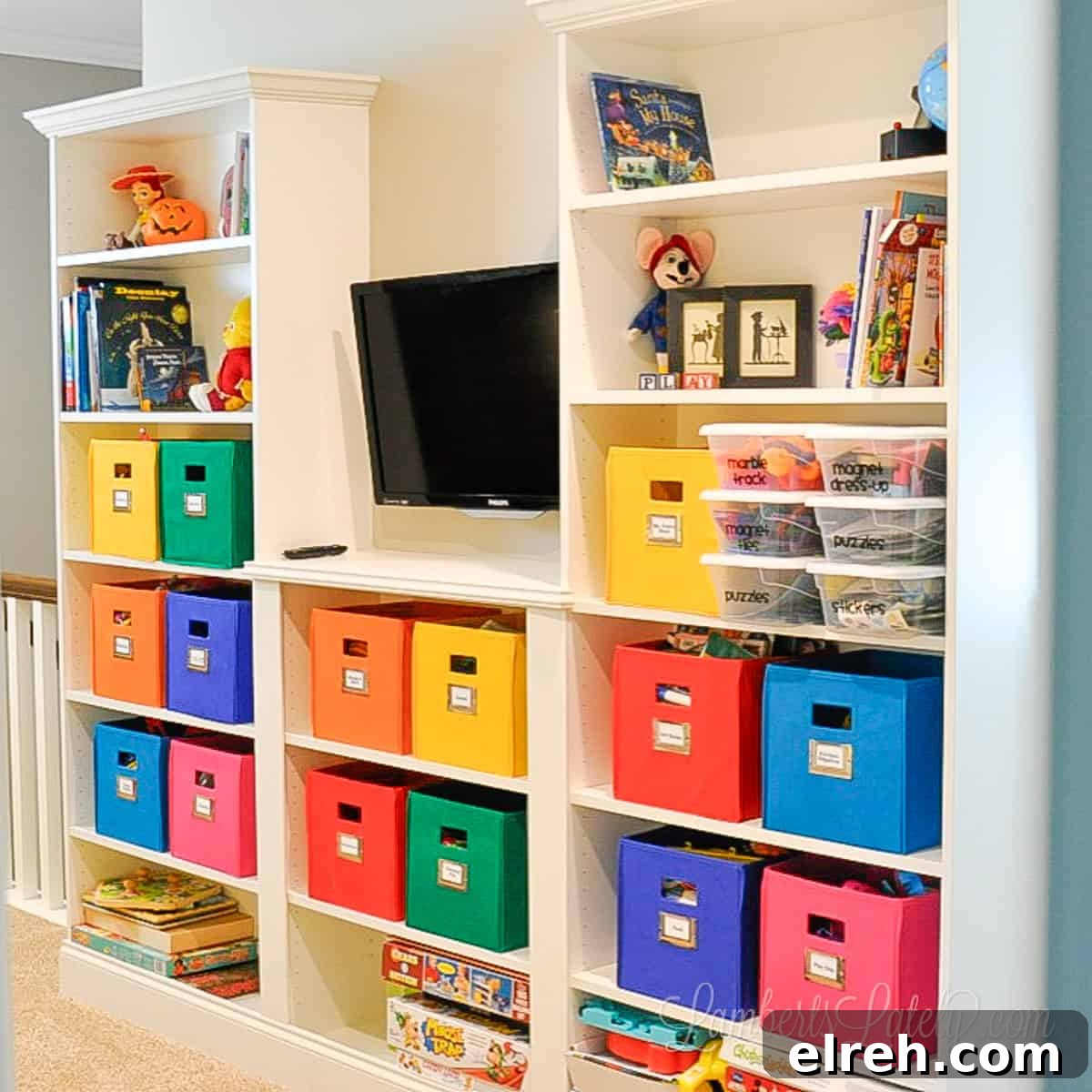
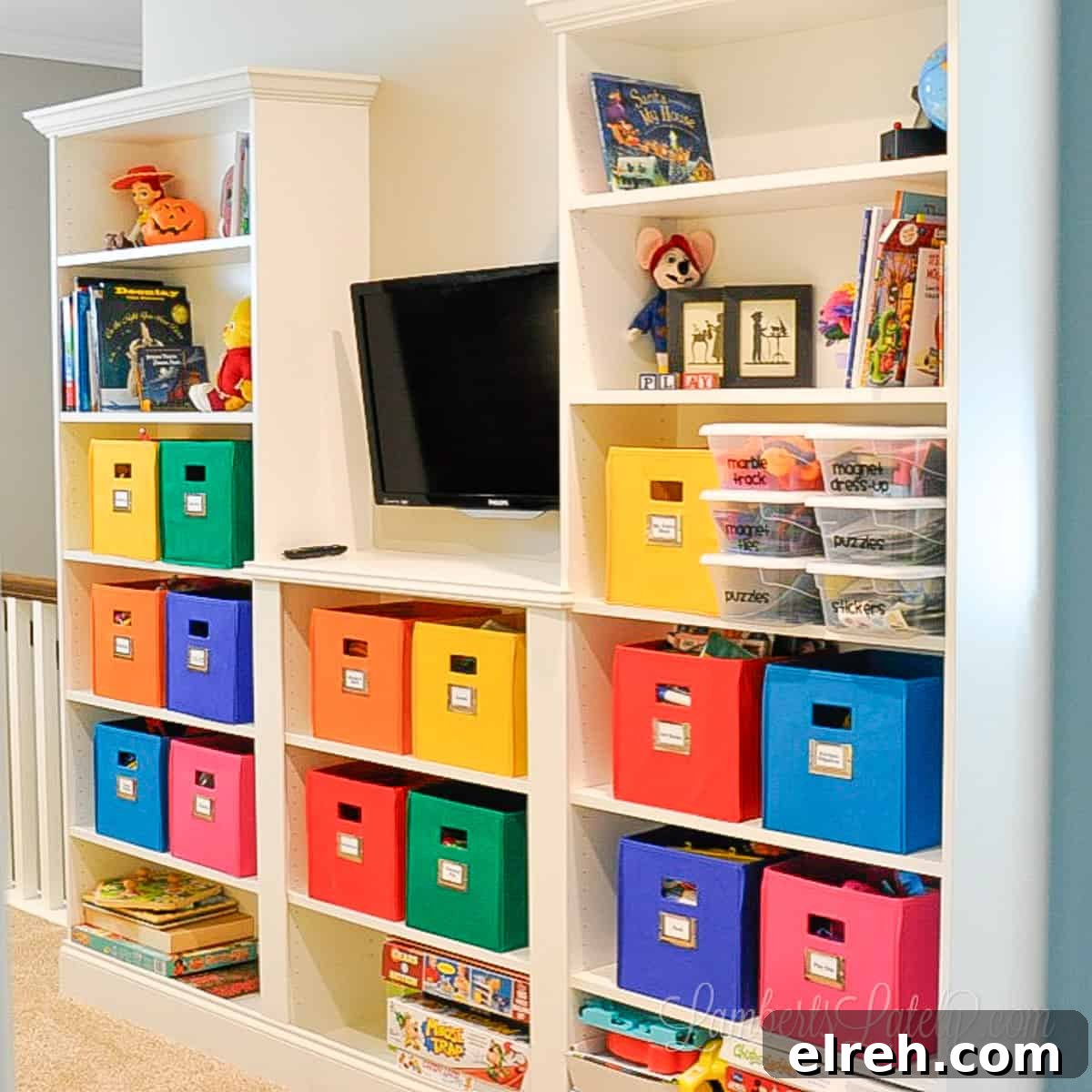
This is the ultimate DIY Ikea built-in hack: use Billy bookcases to create custom cabinets. It’s a budget-friendly way to add attractive, functional storage in a playroom, bedroom, or home office.
Paid links used in this post.
Before Installing Built-Ins
When we moved into our home in 2017, the playroom needed better storage. It’s a small room, so maximizing vertical space was essential. Rather than pay for custom cabinetry, we looked for a cost-effective solution that would look high-end and provide practical storage.
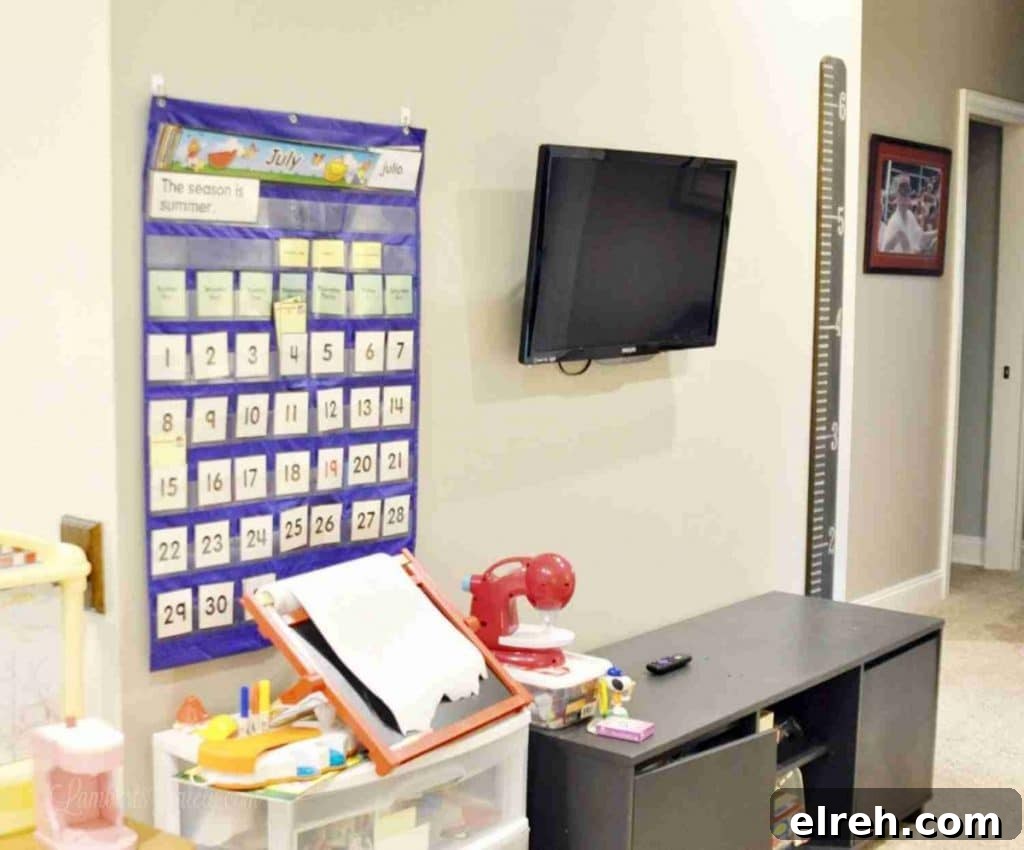
One of my go-to organization tips is to go vertical. Don’t limit yourself to floor-level storage when toys, books, and art supplies can be organized up the wall. We converted an underused TV wall into built-in cabinets using Ikea Billy bookcases, and the transformation was dramatic. It framed the room, added much-needed storage, and gave the space a polished look.
Here’s how we put it all together.
Supplies Needed
- Ikea Billy bookcases (see step 1 for sizes used)
- Drill (for assembling shelves and securing brackets)
- Miter saw (for cutting crown and base molding)
- 1″ white finishing nails
- Nail punch
- At least 8′ of crown molding (we used 3.265″ tall molding)
- Baseboard material sufficient to cover the front and sides of the units, if you can’t reuse existing trim
- Caulk
- Wood filler
- Sandpaper
- Particle board or thin MDF for a continuous center shelf
- 1″ chair rail molding (for a finished front detail)
- Semi-gloss or gloss white paint to match the cabinets
Total Project Cost
We completed this project in 2018, so prices have risen since then. At the time, the project cost around $400, not including larger tools like a miter saw or pneumatic nailer.
Step 1: Measure your available wall space and plan, plan, plan.
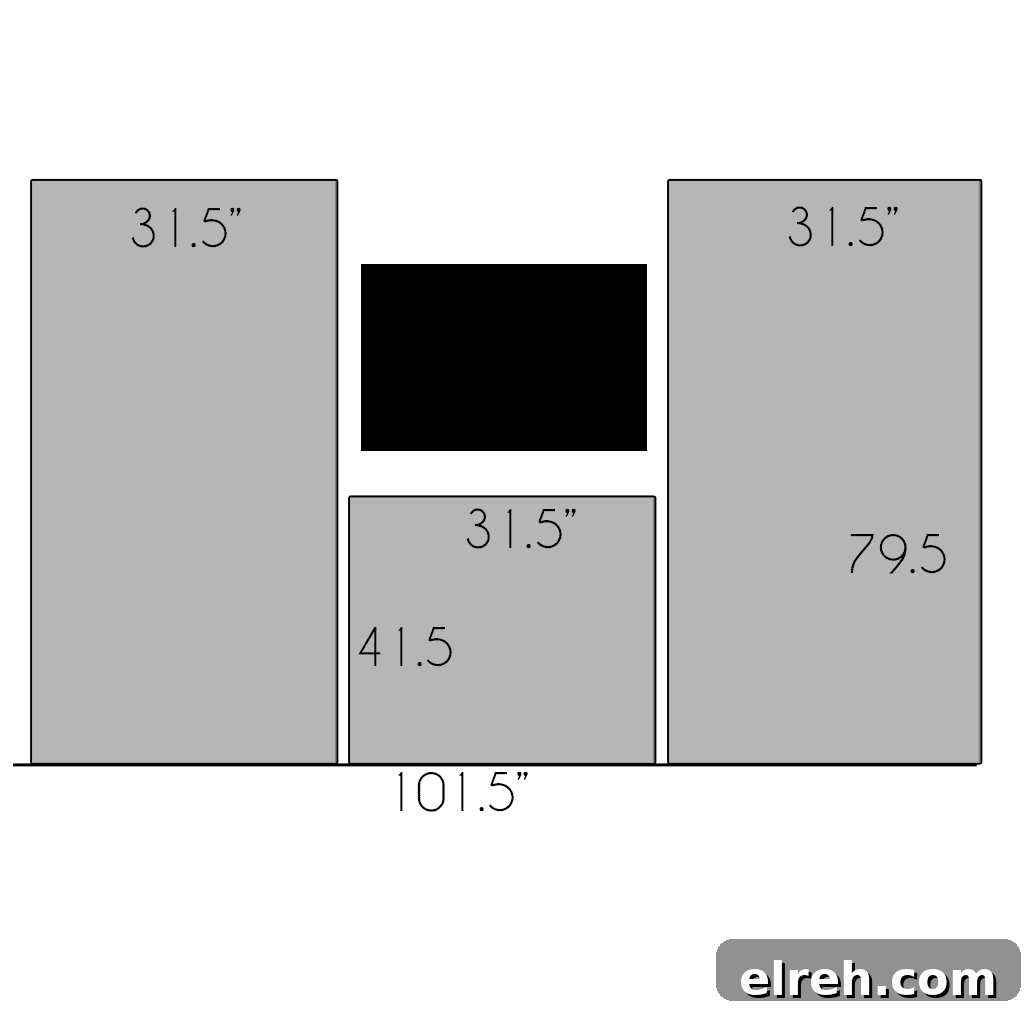
Begin by measuring both the width and height of the wall where the built-ins will go. Note obstacles such as a TV, vents, or electrical outlets. For our wall we had 101.5″ of usable width and 9′ ceilings.
We used two tall Billy bookcases at 31.5″ x 79.5″ for the sides and a shorter center bookcase at 31.5″ x 41.5″. Planning the exact placement lets you see whether you’ll need small gaps for a TV or whether the units can sit flush together. If you have a TV in the center, you may need to leave a couple of inches on either side for clearance — those gaps are easy to cover later.
Cabinet Height Tip
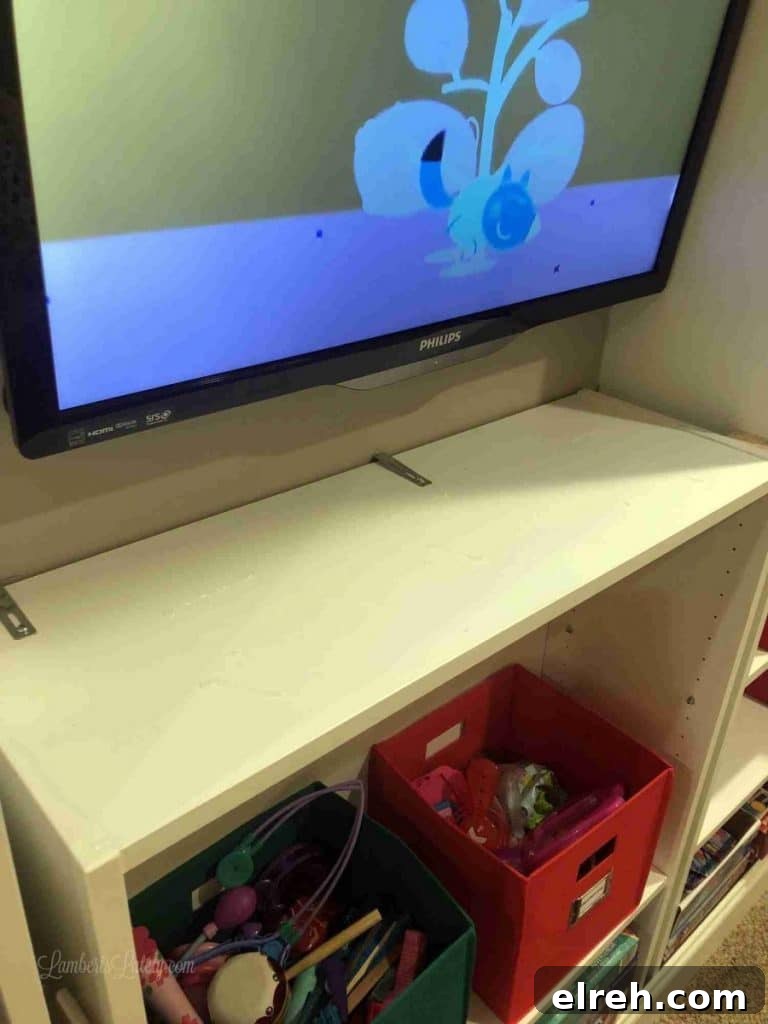
We wish we had raised the cabinets by 2–3 inches to avoid the baseboard overlapping the lower shelf. A simple fix is to place thin plywood or block spacers under each cabinet before anchoring them to the wall. That prevents a lip created by the trim and makes the finished look cleaner.
Step 2: Build the Billy bookcases.
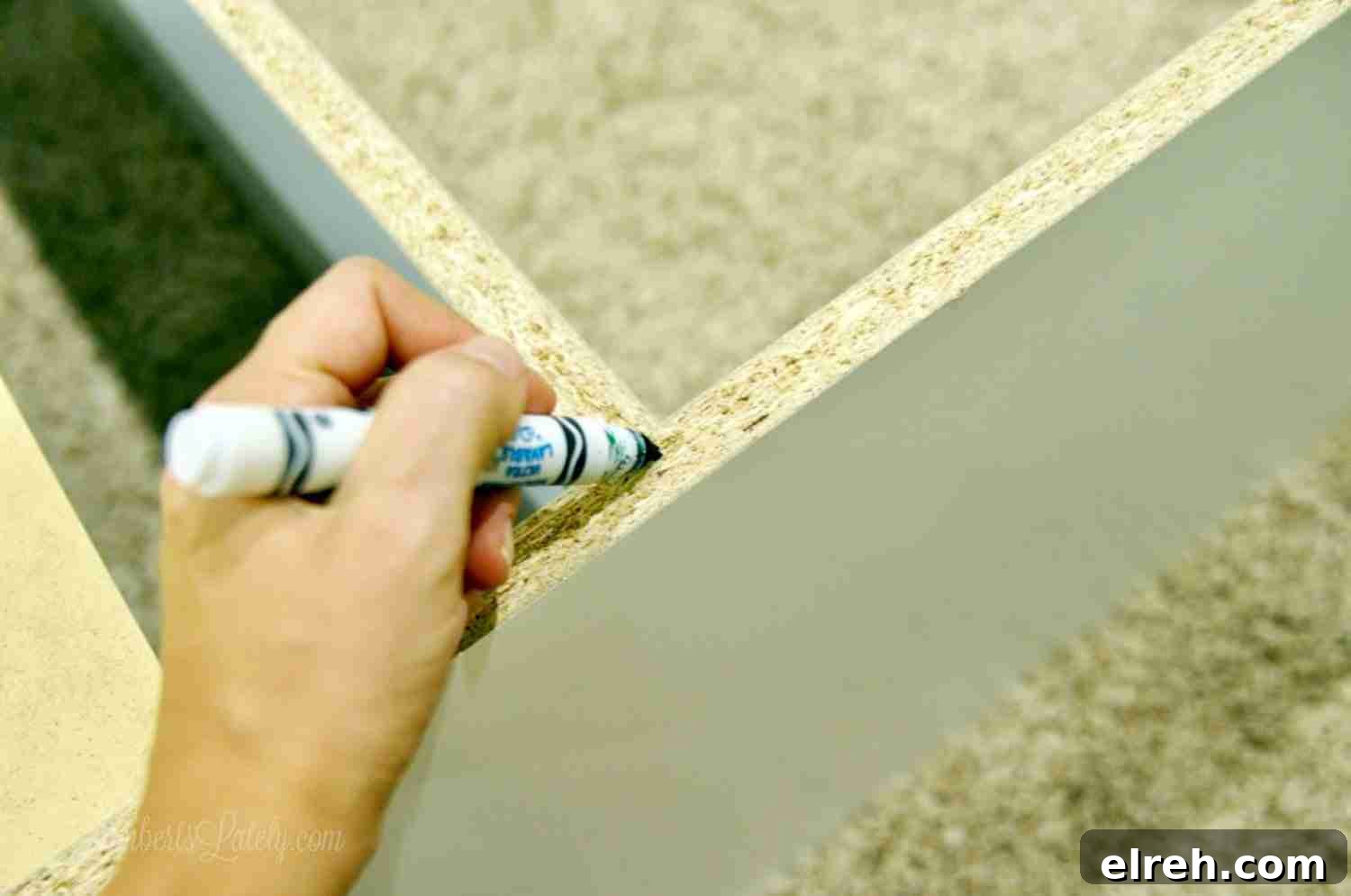
Assemble the Billy bookcases according to Ikea’s instructions. They’re straightforward to build. One tip: before installing the solid back panel, mark the location of the middle shelf on the inside back. That way, when you nail the back panel on, you’ll hit the shelf and the nail heads won’t be exposed.
Step 3: Eyeball how the shelves look against the wall.
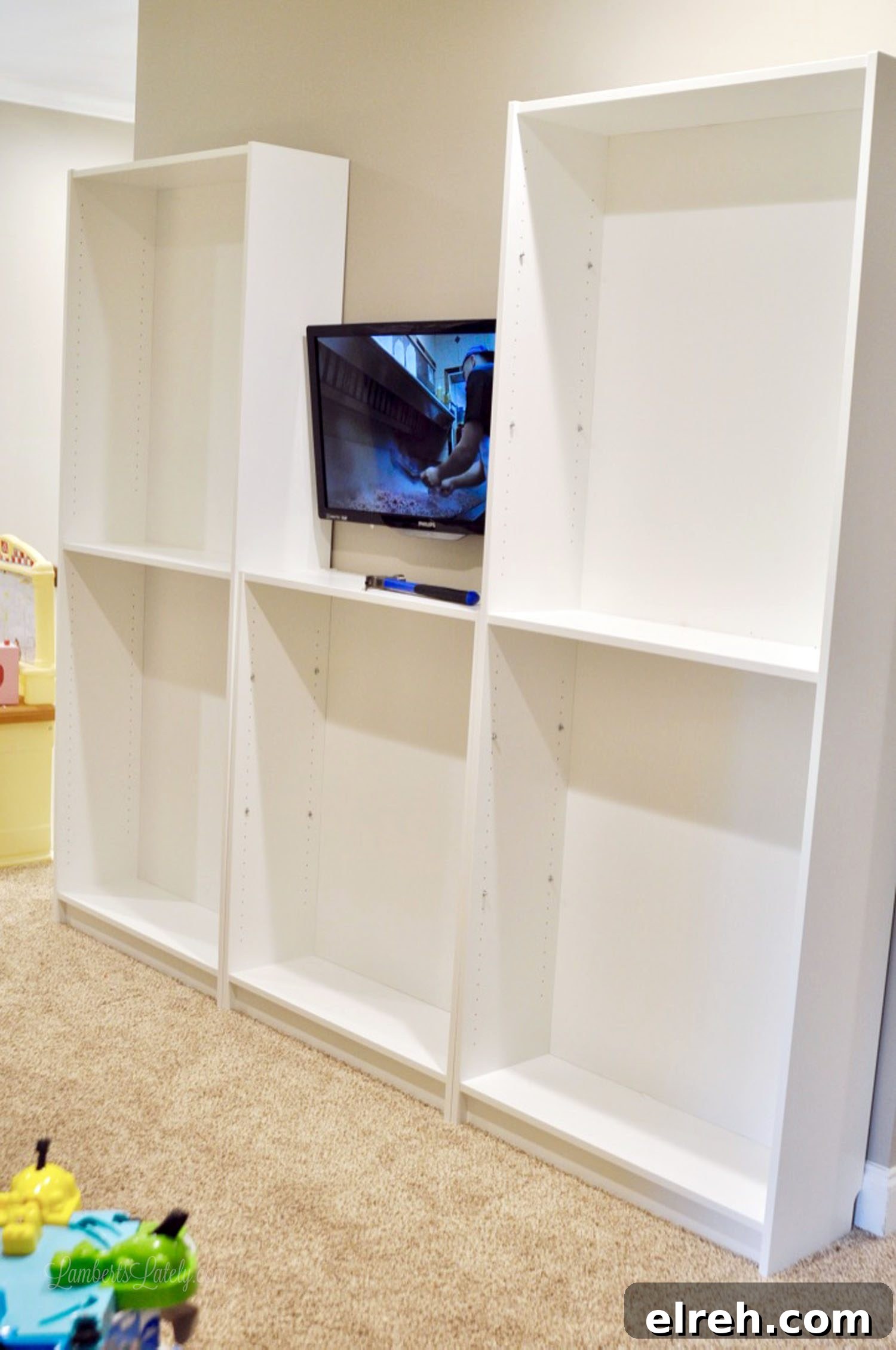
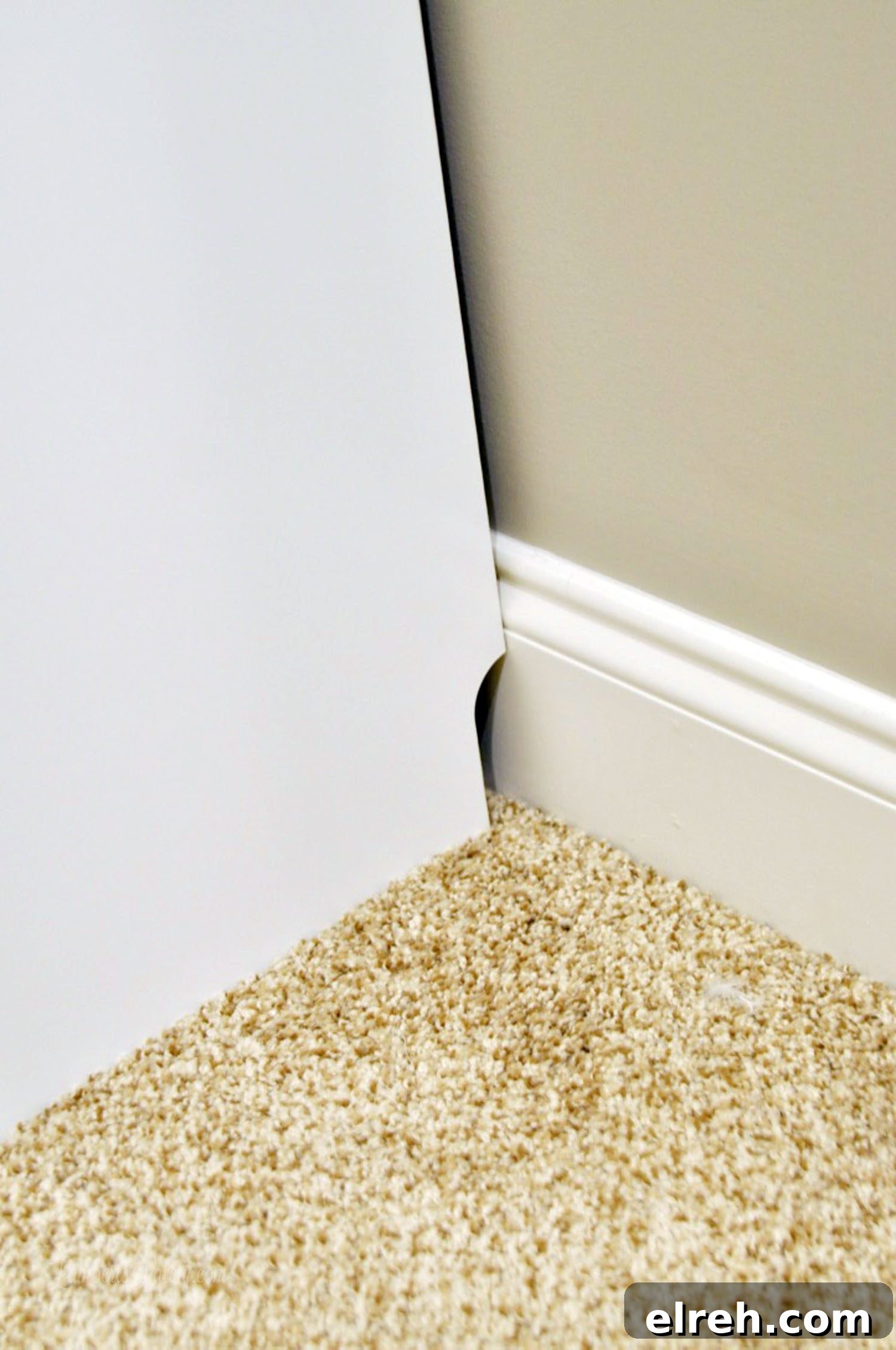
Place the assembled bookcases where they will be installed and check how the existing base molding and wall features interact with the units. Some Billy backs have notches for baseboard; if your trim fits in those cutouts, you can skip removing trim. If not, plan to remove the baseboard carefully and reuse it if possible.
Step 4: Remove baseboards if needed.
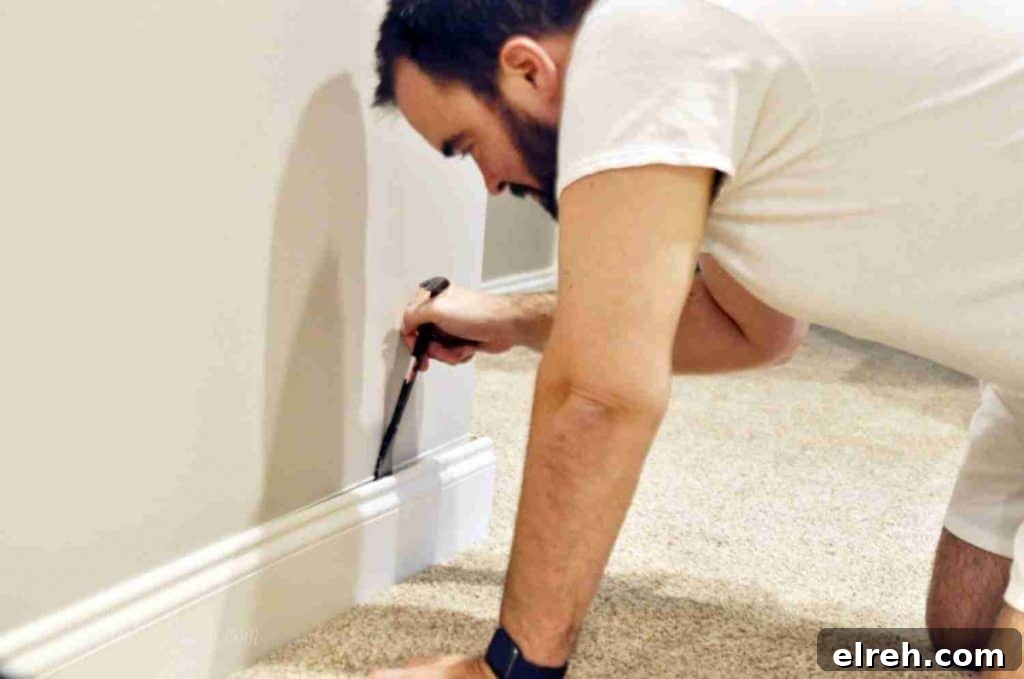
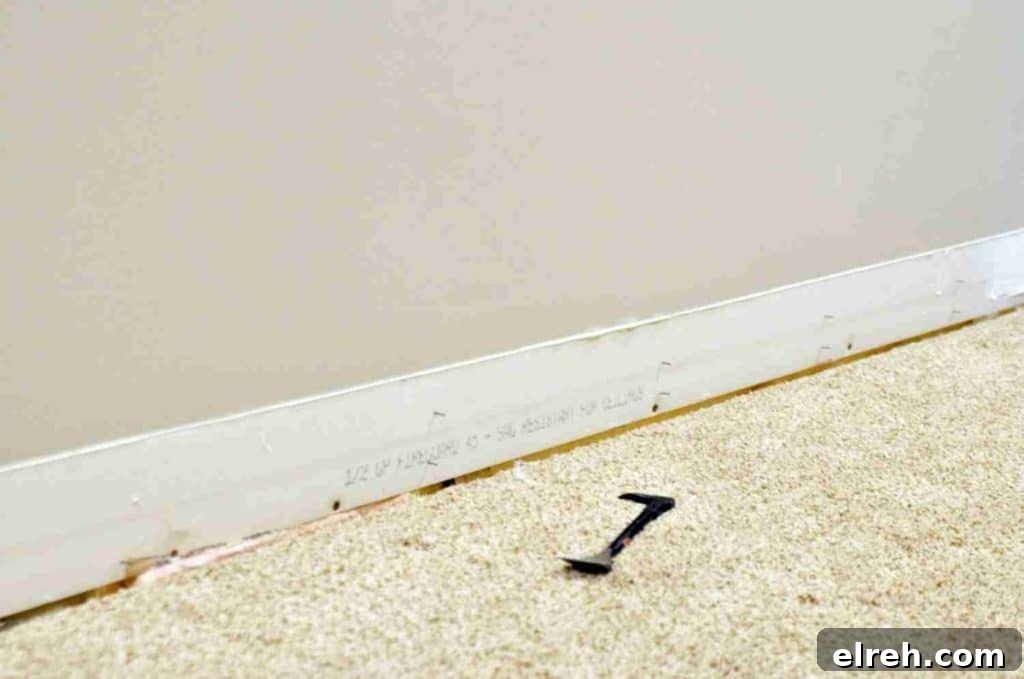
If your baseboard won’t fit into the bookcase notch, carefully pry it off the wall. Take care not to crack or break the molding if you plan to reuse it on the fronts of the shelves. Remove any old nails or debris from the wall before continuing.
Step 5: Secure Ikea bookcases to the wall.
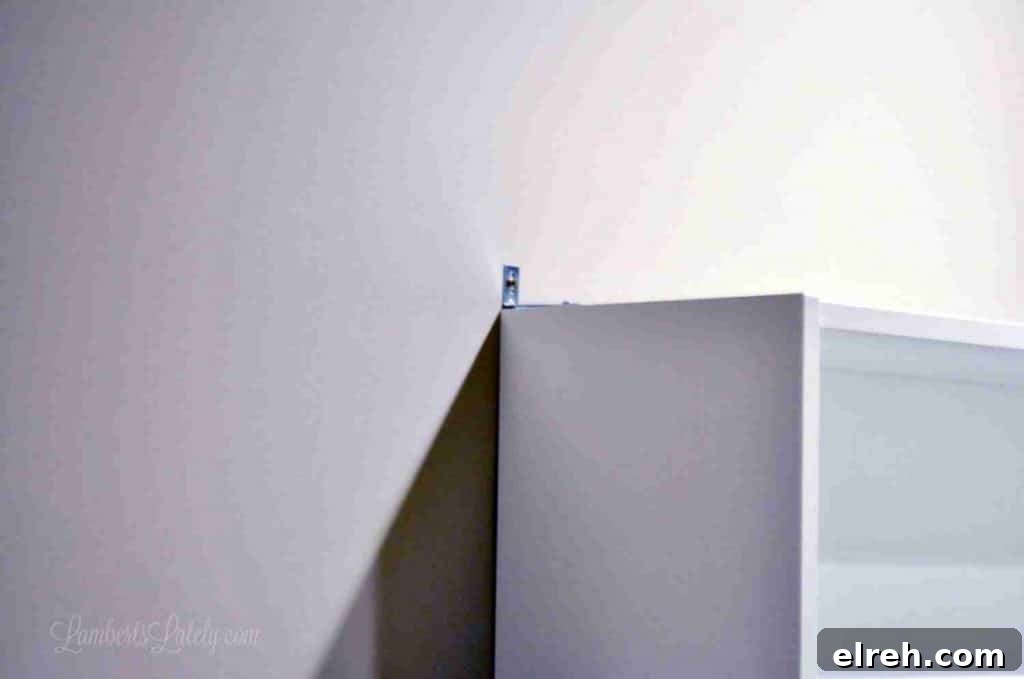
Use the metal L-brackets that come with Billy units (or your own heavy-duty brackets) to anchor each bookcase to wall studs. Securing into studs is important for safety and gives the built-ins a stable, permanent feel. Don’t worry if the brackets are visible at this stage — crown molding and trim will hide them later.
Step 6: Attach crown and base trim.
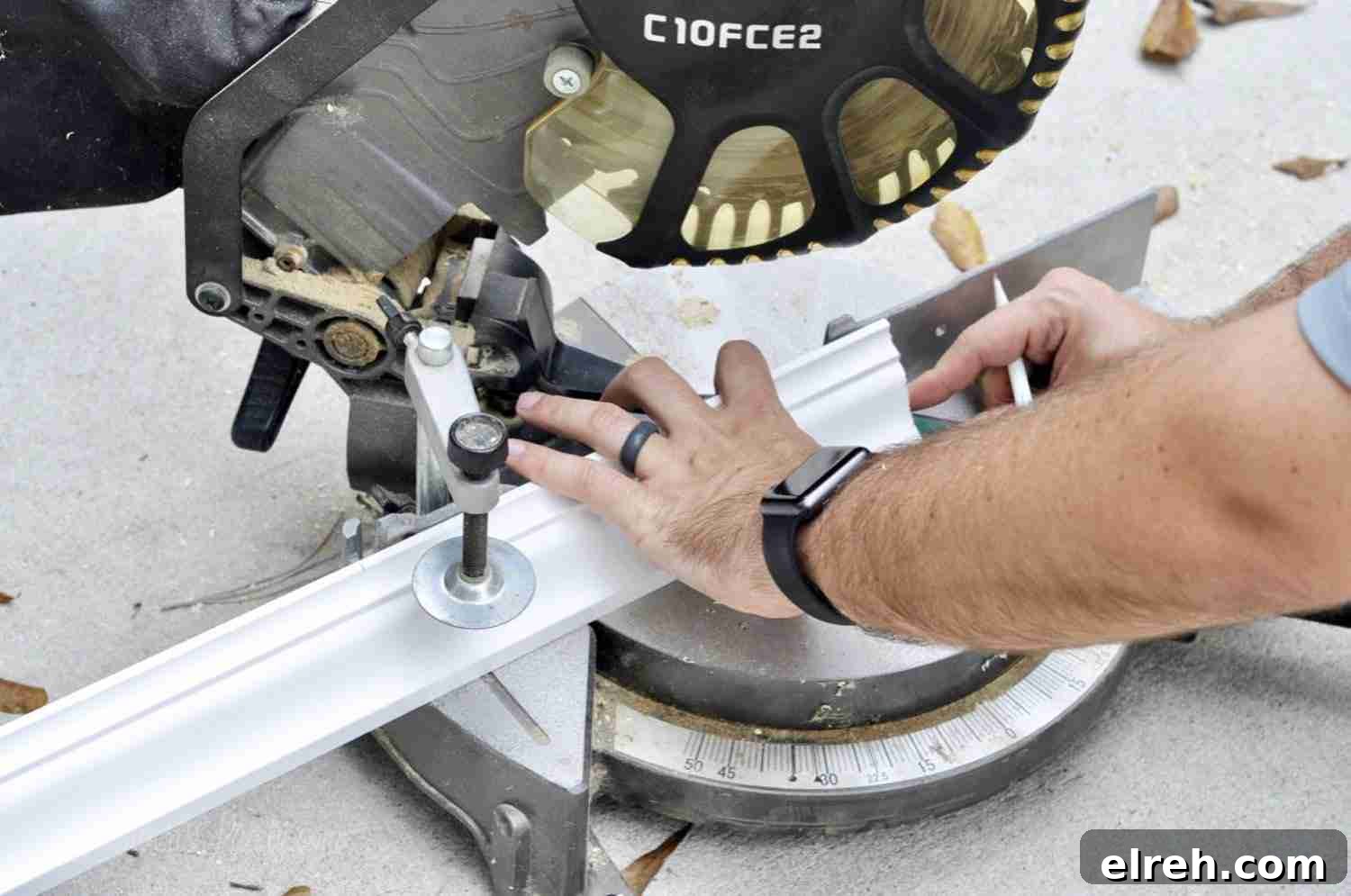
Installing crown and base molding is the step that transforms the Ikea units into custom-looking built-ins. Use a miter saw to cut 45-degree corners. Position crown molding upside-down on the saw to get accurate cuts that sit against the cabinet face. Glue the joints lightly and secure with finishing nails, then punch the nail heads below the surface for easy patching.
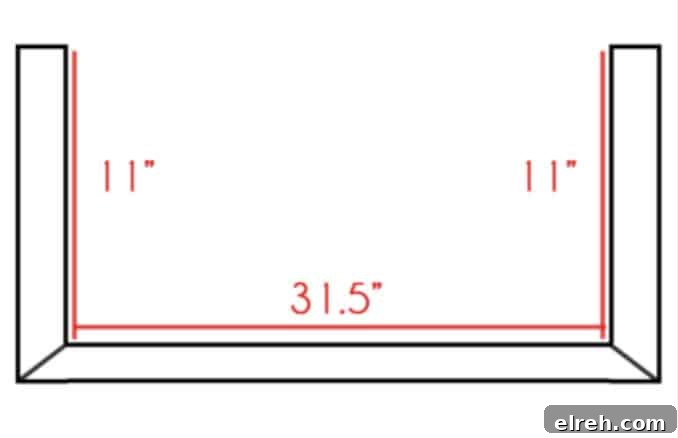
Measure the back lengths that sit against the cabinet carefully — those dimensions determine whether the molding fits snugly. For baseboards, simple 45-degree cuts on each corner usually work well, and you can often reuse existing baseboards for the front piece.

Step 7: Attach the middle shelf topper and cover any gaps.
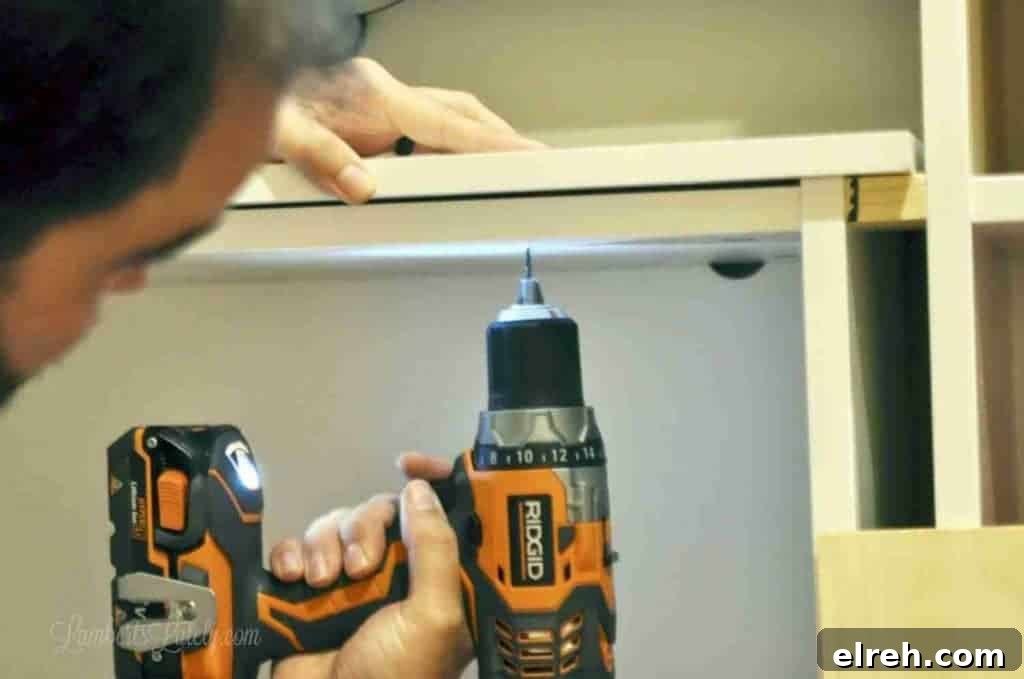
To make the center look like a single continuous shelf, cut a piece of particle board or thin MDF to cover the top of the middle unit and the gaps between cabinets. Glue it down and reinforce from underneath with screws that are long enough to hold but not so long that they poke through the top. We used 1.5″ screws to be safe.
Fill the gaps between cabinets with a 3/8″ x 3″ poplar strip or similar filler that lines up with the baseboard height. Small filler squares on exposed edges create a seamless look; glue and caulk them into place, then finish the front edge with a 1″ chair rail for a cohesive trim detail.
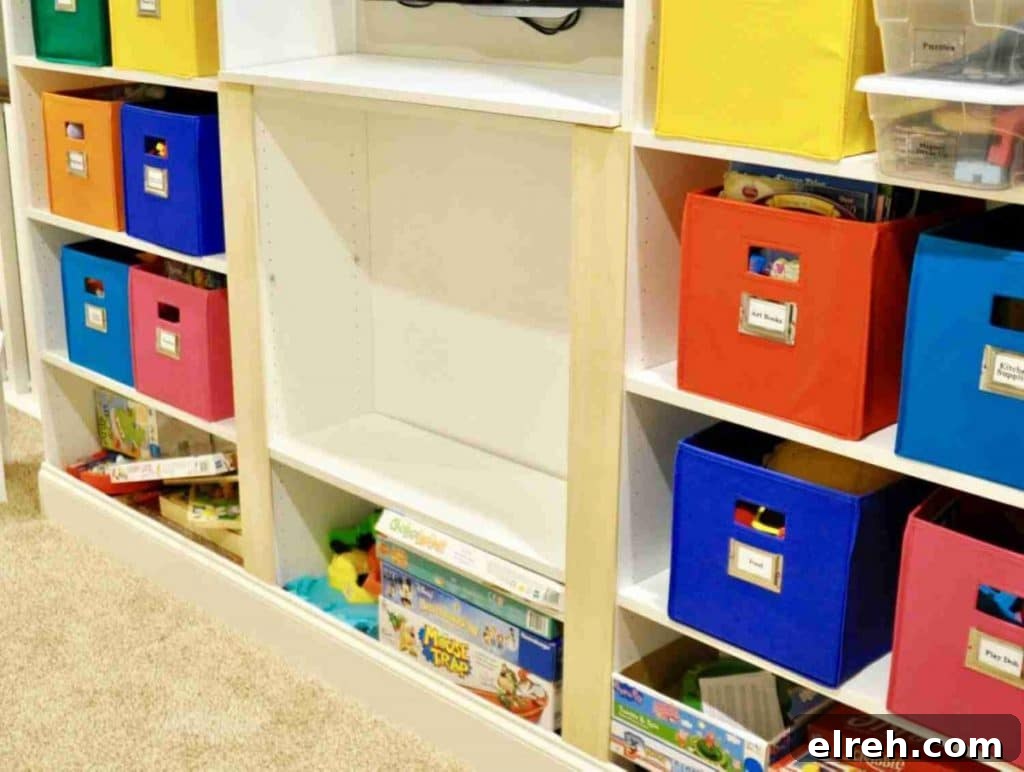
Step 8: Caulk gaps and patch nail holes.
This step is crucial to achieving the built-in look. Start by filling nail holes with wood filler, let it dry, and sand smooth. Then caulk every seam where the cabinets meet the wall and along the crown and base molding. Smooth the caulk with your finger and use a damp paper towel to remove excess for the cleanest result. Proper caulking makes the difference between a good and a professional-looking finish.
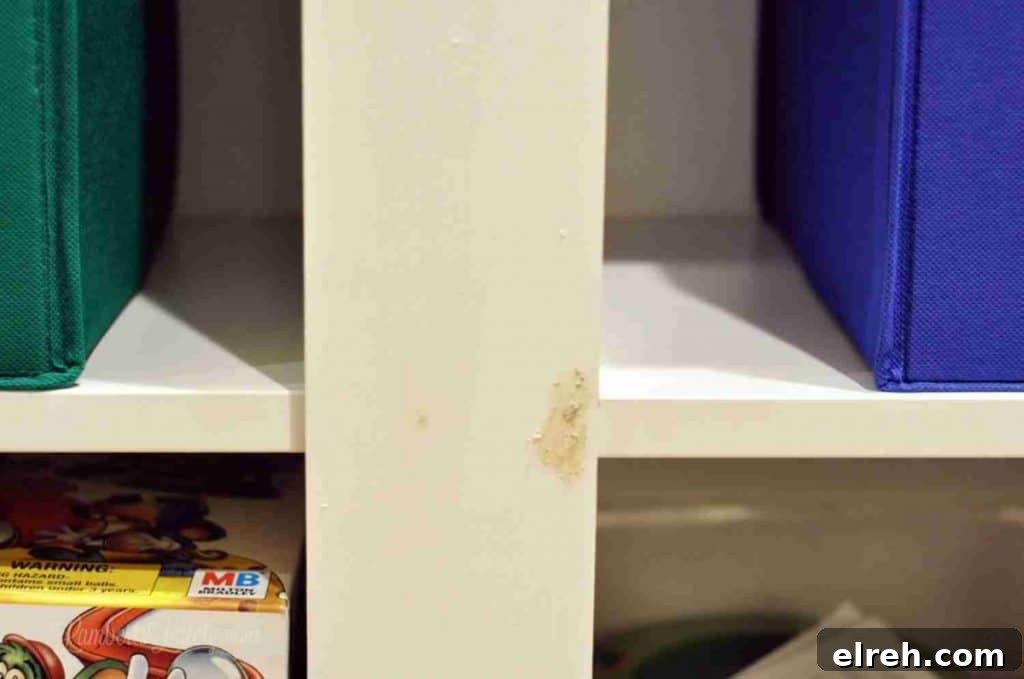
Step 9: Paint trim to match bookcases.
Finish the project by painting the trim and any added boards to match the Billy cabinets. A true white in semi-gloss or gloss will best match the Ikea finish. Test paint first — a trim color that looks white in one light can read much darker next to the cabinet finish. Multiple coats may be necessary to get a seamless match.
Final Results
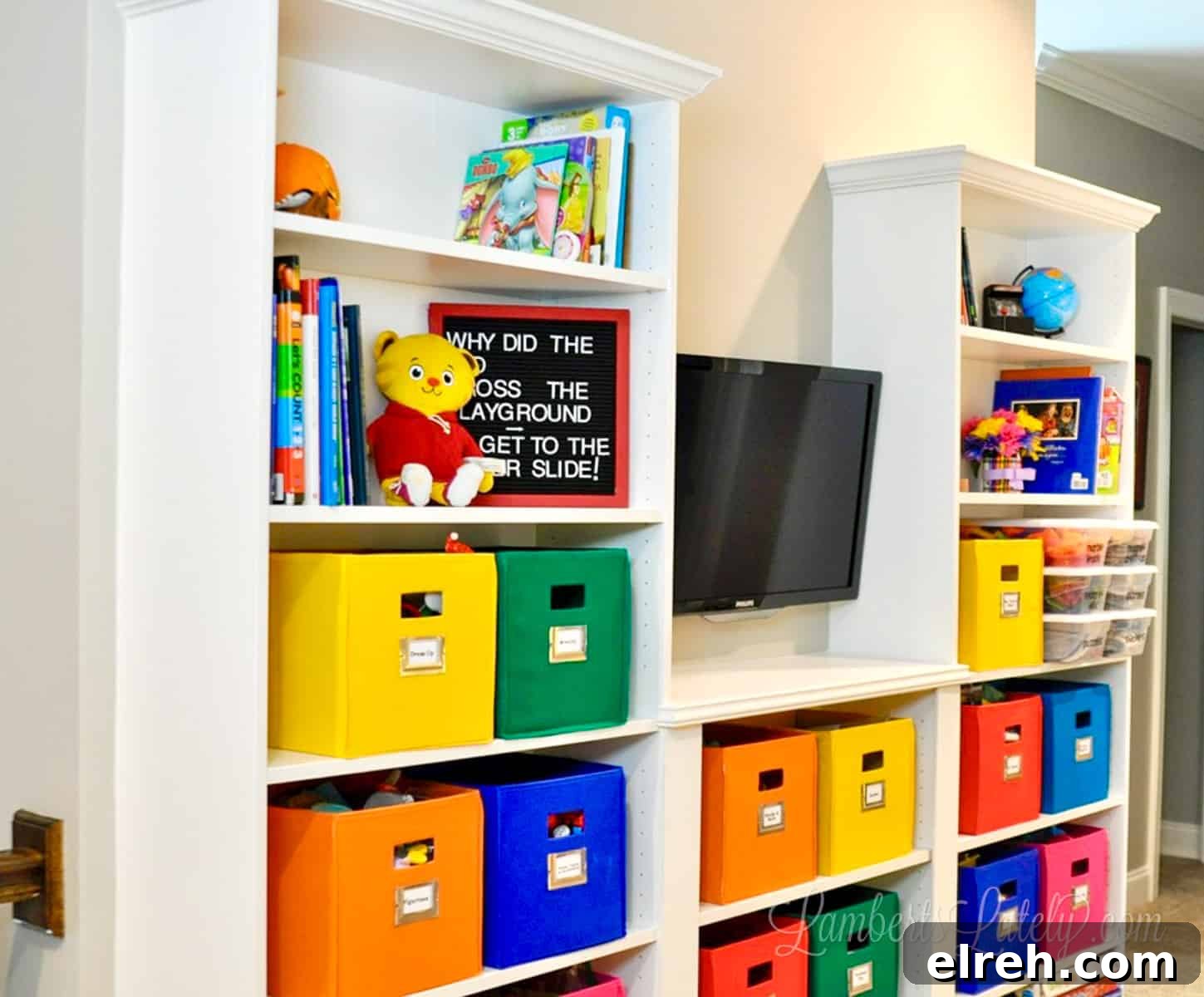
We’re thrilled with how the built-ins turned out. For a modest budget, the playroom gained attractive, functional storage and a clear focal point. The process involves careful measuring, secure mounting, thoughtful trim work, and careful finishing — but the result is well worth the effort.
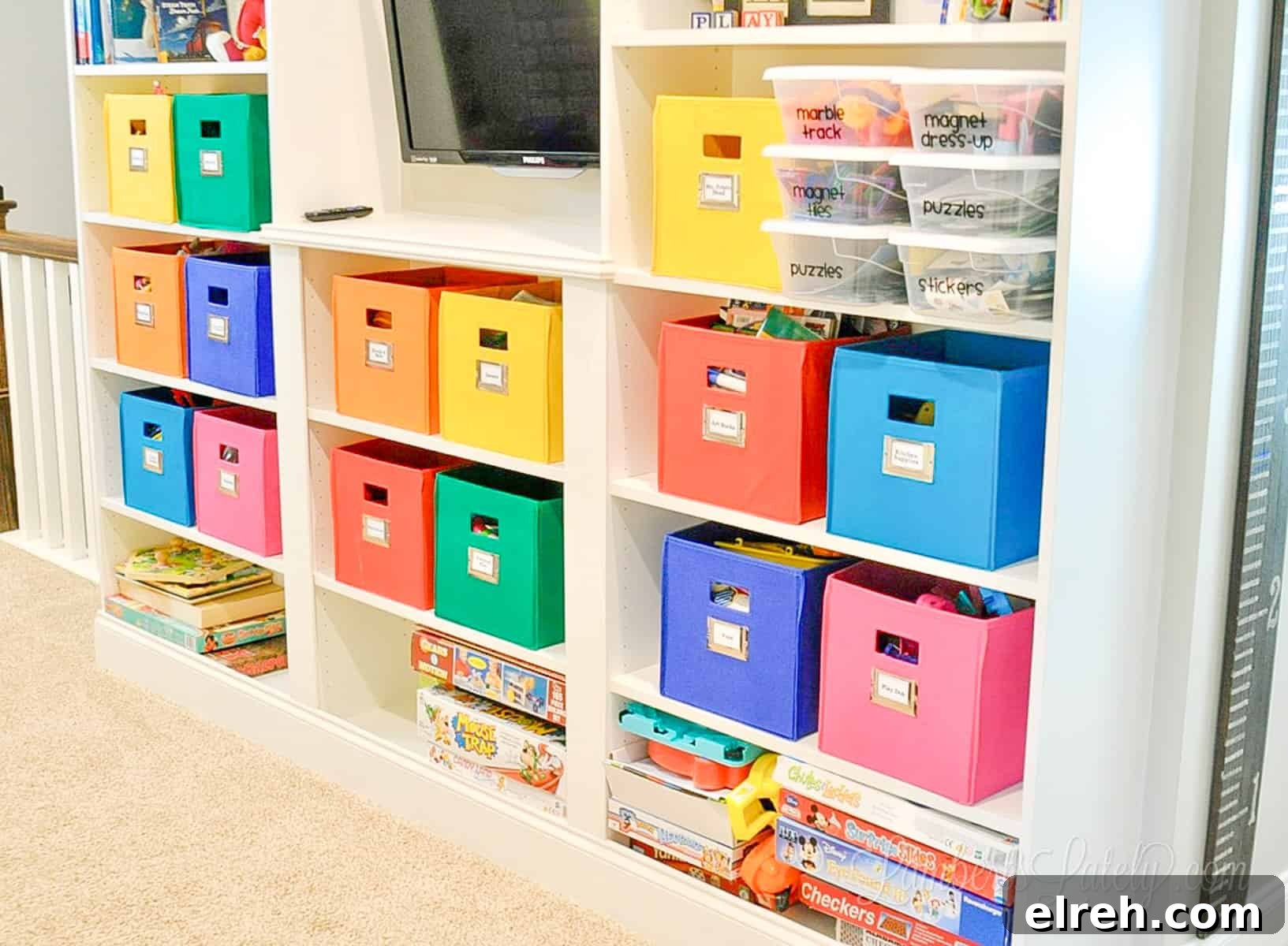
Thanks for stopping by! I’d love to see your Ikea built-in creations—tag me on social media @lambertslately with your project photos.